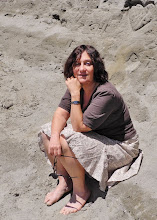
Thursday, February 19, 2009

Google Shmoogle

On a Google search, my obituary pops up. I must be dead. So here, grief-stricken readers, is my report from the Other Side. What's it like? Well, it's rather pleasant where I am—no baton wielders, cranky musicians, or Madoff-like philanthropists, and the food is to die for, yet calorie free. Curiosity gets the best of me though. Every now and then I feel the need to check in on the earthly realm, my former dwelling place. Let's eavesdrop, shall we?

Violinist colleagues: "What? She's dead? You don't say! All the more opportunities for us to take over her gigs and students. How many students do you suppose she had, anyway—"

Sir Metro Gnome, Esq: "Bah! Good riddance. Marjorie rarely followed my exquisite interpretations and infallible beat, and her rendition of 'Swan Lake' was clumsy. I'm glad I got her to quit—"

Dearly Departing One: "One less potential witness to worry about for that potential trial to worry about, but that still leaves her husband to worry about, and everyone knows how cagey he is—"
Little does Stickman know. The Real Trial is on the Other Side.

Husband (looking longingly into the empty crockpot): "I haven't eaten in days—"
Banana peels are strewn around the house.

Eldest Daughter: "No matter what—we're still having our Seder during Pesakh. We'll set a special plate for Elijah and Ma together. By the way, has anyone seen Ma's diamond necklace—?"

Youngest Daughter: "What about the homework assignment Mom didn't finish? She was supposed to be my topic for the frontal lobe study in Science. My whole grade depends on this—"

Book Club: "All she wanted was to discuss 'Steppenwolf'. She seemed so fascinated by the section about the magic theater for madmen only, and the disintegration of a personality—"

Critic: "I thought I killed her long ago." He looks pale. "The tables seem to have turned."

Uh, oh. The magic pill I took is really taking effect. To spite everyone, I'll be returning to life in the morning from this Ambien-induced state.

Friday, February 13, 2009

Notes for a Novel

"I want to write a novel. I'd take fiction any day over boring facts and figures," I said to my sweet neighbor, Ellen Carlin, (whose father is renown pianist Ralph Berkowitz, THE Ralph Berkowitz, as in accompanist for Gregor Piatigorsky) yesterday, over lunch at our house.

Ellen sat across the dining table from me, sipping Verona blend, and nibbling on a cookie. "I miss hearing you perform," she said. "I so enjoyed your concerts over the years. Where can I hear you play—"

My mind sputtered like the coffee maker; I mentally created sketches for my tale, a potboiler. By the time we finished the biscuits and coffee, and said our good-byes, I went to my desk to jot a few things down. Remember, dear readers, this is my first attempt, a work-in-progress.

Notes for Novel

Man with a stick observes high-heeled, voluptuous woman in orchestra, and whispers revealing remarks to first desk players. Why not? Music stirs passion, and anyway, this has always been his character.

Stickman perceives himself above the law, and has loyal workers ushered out by a meek person of authority. Flesh out this character. Make him three-dimensional, not flat, bloodless, and cardboard, though that's how he appears in real life.

Introduce a very zaftig woman into the scheme. Rhetorical question for readers: Has she consumed too many gummy bears from the vending machine? Teething crackers with jam? Sedentary job, perhaps. Sad.

Introduce vulture-like members of the media. Add comments from Op/Ed to heighten conflict and spin intrigue.

Grandma's death. Graveyard scene. Bring in siblings. Family quarrels over estate. Don't forget to use foreshadowing technique; more deaths occur.

Cat learns piano. Dramatize. Hyperbole. Cat's 12-tone composition is deemed World Class.

An ensemble is forced to file for bankruptcy, though not in debt. End chapter and hook reader by presenting inconclusive evidence. Potential page turner. Whodunnit?

Rumors of suicide.

Learned stranger calls, and calls, and calls. Redemption?

Thumper is swallowed by quick-sand, and critic cronies accompany him. Note alliteration usage.

Sudden economic collapse—a fallen house of cards. Sardonic laughter is heard in background.

Could it be Mephisto?

Thursday, February 12, 2009

Obituary

"What are you up to, little munchkin?" I ask my daughter Sarah, as she sits at the dining table deep in concentration.
"Writing my obit."
"You're what?"
"For drama class," she adds. "Why don't you try it, Mom."
The wheels in my head spin. Unlike calculus, or logic puzzles, this request I can do.
An opportunity for my readers.

***

Marjorie Kransberg-Talvi, a violinist, collapsed at the karmic age of 49 in between music lessons. The cause of death: over-dose from a suspicious crockpot recipe. Ms. Kransberg-Talvi, a believer in the sorcery and healing properties of slow cooking, concocted stews of various root vegetables, legumes, and basically anything found in the fridge. Whenever a dish smelled foul or tasted particularly toxic, she'd whisper under her breath, Stew-Art.

Ms. Kransberg-Talvi moved to Seattle from Los Angeles in 1984, after marrying the clever and disputatious Finn, Ilkka Talvi. Both violinists, who met in the Los Angeles Chamber Orchestra, maintained active lives in the Seattle musical community in spite of having been the victims of discrimination and retaliation by the local SS officials. After a successful blogging campaign which recorded their plight as ex-communicated concertmasters, news traveled to the far corners of the globe that corruption and greed had swept the "aesthetic dustbin". Ms. Kransberg-Talvi enjoyed learning that the Law of Talion (an eye for an eye) existed for humanity, and often confused the term with Law of Talvion.

Ms. Kransberg-Talvi is survived by her husband Ilkka, two daughters, Anna Mirjam and Sarah Lilian, two step-daughters, Silja J.A Talvi and Dr. Sonja Rosen, one sister, Susan R. Myers, and a beloved cat named Seymour. In lieu of flowers for the deceased (she wasn't particularly good with plants, anyway), contributions can be made to Rainier Symphony and PAWS.
Image from disanoart.com

Sunday, February 1, 2009

The Lark Ascending

It's Sunday morning. I began the day with a coaching of The Lark Ascending by Vaughan Williams with Jiho, one of Ilkka's most dedicated pupils. It's a rapturous work. I've always hesitated to perform Lark because it demands a flawless bow control combined with serenity of soul. During the years when I served as Artistic Director for Northwest Chamber Orchestra's Showcase Series, I had the great fortune of performing the Vaughan Williams with the indomitable British clarinetist and pianist Thea King. I remember telling her:
Thea, I'm freaking out; the piece is too exposed.

Oh Marjorie, she laughed, pulling up the piano bench. You'll do just fine, you'll see.
I mentally reminded myself to breathe slowly, like being in labor and delivery. I'll tell you, the delivery of the final high B came as a tremendous relief at the conclusion of the Showcase performance.

Fifteen year old Jiho has quite a bit of work to accomplish before he'll be able to emulate the sound of fluttering wings by the use of sul tasto and facile fingers, or transport listeners through an artful ascent, but it'll happen. Jiho's eagerness to study and self-possessed maturity sets him apart from his peers, and I think he has the magic.

The single most remarkable performance of 'The Lark Ascending' that I ever heard was that of violinist and conductor Joseph Silverstein. Although he referred to himself as just an old, bald, Jewish fiddler—and introduced himself by the use of a four letter word (Joey)—the artistry that Maestro Silverstein brought to my life is forever inscribed in my heart. What does this help to prove? Some maestros are adored and occasionally—missed.
In photo clockwise: Joseph Silverstein, Ilkka & Marjorie Talvi

Friday, January 30, 2009

In His Shoes

While Ilkka is away in Finland, performing a recital and offering masterclasses at Pori Conservatory, I've stepped into his shoes. If my readers are disappointed by fewer posts this week, I hope these excuses are sufficient: I'm coaching Ilkka's batch of talented, eager students, as well as my own pupils, feeding our cat Seymour numerous times a day (Ilkka spoils him with an array of dishes—buffet style served on my best China). I sit in the passenger seat chewing my thumbnail as Sarah, our 16 year old, drives herself to school each morning (at least Sarah plays Oldies - Billy Joel and Simon & Garfunkel - for my benefit). I'm acting concertmaster for Rainier Symphony for two weeks, and at the suggestion of David Waltman, guided the responsive and supportive strings through a sectional last Tuesday. I returned home from the rehearsal, as Ilkka often does, feeling uplifted from adventuring into challenging repertoire in a nurturing and positive environment. I could write a whole essay contrasting the Egotism of so-called musical professionals (Parallel Universe, remember, in my That's Gratitude post) as opposed to the Humility of the music lovers, who are accomplished in other fields. If I had my life to do over, I'd choose another career besides music; a sort of back to the future is taking place in the arts nowadays.

As I look forward to another day of teaching Ilkka's students, I remind myself, first do no harm. Listening to the various styles and noting the different techniques of learners, I'm mindful of a trait known as Individuality. One youngster plays with a too-careful approach. What to do? We play-act, and I conjure up Konstantin Stanislavsky, the Russian theatre director, writer and actor, in my imagination. We're going to dramatize the Barber Concerto and allow each scene to unfold, step right into the composition, and lose ourselves in the process. The crucial goal for teachers should be to energize students into finding the way themselves!

A phenomenal pupil of my husband's, violinist Rose McIntosh from Seattle Pacific University, is blessed with dramatic flare, and strong musical conviction. Her playing reminds me of the late Ginette Neveu. Rose will be performing the Sibelius Concerto with Thalia Symphony this Saturday afternoon, January 31, and I'll be there, bursting with pride. I hope you'll join me.

Thursday, January 22, 2009

Vilnius String Quartet

I decided to flirt with becoming a self-proclaimed music critic this evening. With notebook in hand, I attended a concert of the Vilnius String Quartet featuring guest pianist, Dainius Vaičekonis, presented by the Seattle Lithuanian Community, at Latvian Hall. In true critic fashion, I sacrificed the post-concert reception of tantalizing finger foods, booze and shmooze, in order to meet my deadline. What do those critics really do, anyway?

The Latvian Hall was bustling with audience members, eager to hear their countrymen. After a warm greeting and introduction by Mr. Vaičekonis, the Vilnius String Quartet proceeded with Schubert's Quartet #10 in E-flat, a youthful work composed when Schubert was only 16 years of age. The ensemble performed with sensitivity, poise and precision, though I found the opening bars of the first movement overly cautious and thin, particularly in the low registers of the first violin, as if sufficient calories had been lacking at dinner. By the Scherzo movement, however, the quartet's sound thickened to my taste.

The second composition on the program, Quartet #2 by Osvaldas Balakauskas, captivated this listener's interest and imagination. Balakauskas, one of Lithuania's most prolific composers of today, utilizes a technic of diatonic tone rows in his string quartet which guides the listener into an auditory Rorschach test. To my mind, the haunting groans, moans, and shrieks emitted by the quartet evoked images of Ponary (Paneriai), the killing fields, a forest six miles from Vilna. It was at Ponary that between 70,000 to 100,000 Jewish victims were murdered by the SS and Lithuanian collaborators during the Shoah. I shivered throughout the ghostly second movement; bones clattered through the use of col legno, the elegiac cello, played magnificently by Augustinas Vasilauskas, sighed through the device of glissando pizzicato; the viola maintained a contrapuntal voice of rhythmic reason amidst the cries. The quartet of Mr. Balakauskas offers a kaleidoscope of sounds, and I hope to hear more of his compositions performed in Seattle.

The program concluded with an insightful and robust rendition of the Brahms Piano Quintet in f minor. This work, a tour-de-force, offered Mr. Vaičekonis, a daring and technically assured pianist (these days on the faculty of Bellevue Music Works and staff accompanist for Western Washington University) an opportunity to collaborate with his former mentors from the Lithuanian Music Academy. The first violinist, Audronė Vainiŭnaitė (she has been a member of the Vilnius String Quartet since 1965) led the stellar ensemble with a no-nonsense, authoritative approach. The Brahms Piano Quintet exploded with rhythmic vitality, seering intensity, and pathos. Tonight's superb performance makes me want to put away the critic's notebook, have a bite to eat, and practice.
Vilnius String Quartet, Dainius Vaičekonis

Saturday, January 17, 2009

Something Fishy?

Today I found some Icy Point red salmon shelved in the cupboard. The stuff was on sale at Bartell's a couple of weeks ago, so I threw a couple of cans in my shopping cart, along with post-its and Panda black licorice. I remembered my mother's salmon croquettes from my childhood—tasty fish cakes loaded with onion and celery for the perfect crunchy texture. I must have skimped on the egg though, because my salmon patties were crumbly and didn't hold together. Worse yet, the outside layer was slightly burnt.

"Gee, I'm sorry the patties didn't bind and that they're burnt," I said to my husband, as he squirted lemon on the moist pieces while bits of celery and onion dropped onto the plate.
"It's ok," he said. "I don't mind."
He'll eat anything, I thought. "Maybe I should have tried fresh rather than canned."

As our conversation glided to the topic of fish, I found myself wondering: Whatever happened to that stunning, vibrant Israeli conductor, Asher Fisch? Wasn't he named Principal Guest Conductor for Seattle Opera and awarded the company's Artist of the Year award back in 2006/07? Asher Fisch turned me from a Wagnerphobe into a Wagnerphile during productions of Parsifal and Lohengrin.

My curiosity got the best of me. After clearing the dishes, and scraping the remaining crusts of croquette from the frying pan, I sat down at my computer to look for Asher Fisch and Seattle Opera on this year's roster. Funny, except for his playing a piano recital with tenor Ben Heppner and assisting Speight Jenkins with auditioning new singers for the International Wagner Competition, Asher Fisch is hardly to be found on the Seattle scene. You know me by now, dear readers, my imagination lets loose. Does his staggering talent and ability pose a threat? I scan the Seattle Opera season searching for my Israeli heart throb: I find Fish, Fisch, Fishy..

Gerard Schwarz conducts Seattle Opera's production of Pearl Fishers this month.
Photo of Asher Fisch from Playbill

Wednesday, January 14, 2009

Bildungsroman


Am I turning into Pollyanna? I was describing my coming-of-age revelations to my daughter Anna a couple of days ago, telling her life is good. Anna, by the way, gleans obvious satisfaction from tormenting us mercilessly with her own blog: Life With My Parents Seen through Anna's lens, I suppose we're characters. She refers to Ilkka and me as Ma and Pa Raisin.

Over twenty years ago, when Anna was a baby of four months, she looked up at us from her baby swing—as if to study our faces—and burst into peels of laughter. Nowadays, my Anna jots one-liners and keeps a note-pad handy at all times. Every so often, when I'm on the phone with that college girl of mine (in a Masters in Education in Student Affairs Administration, GPA 4.0, no less) she'll stop me mid-sentence. "That's it, Ma. Thanks for the material." And I'm left with a dial tone wondering what she's about to publish.

I have to admit—I love life. The Seattle Post-Intelligencer is about to become The Past-Intelligencer, and critics are from the days of yore. Collective bargaining agreements between managements and players have indicated fermatas, or in some cases, tacet signs. As Blair Tindall eloquently states in "Mozart in the Jungle": The classical music business is experiencing a kind of market correction. If seen in a positive light, by a Pollyanna, this opens a whole new vista for artists, opportunities for innovation, and collaborative creativity. An orchestra player should enjoy an active role, not passive. If you check Daily Observations you'll see what I mean.

Which brings me back to Bildungsroman: As I play among enthusiastic music lovers at Rainier Symphony, cradle my late mother's violin, and nourish myself with friends, students and family, my faith in this journey is being restored.
Photo of Anna Talvi by Ilkka Talvi 12-08

Monday, January 12, 2009

Healing

As I've mentioned in previous posts, sometimes the best lessons I receive are from students. Hallie Golden, one of my most dedicated pupils, suggested we head on over to Ronald McDonald House to perform for youngsters and family members undergoing treatment during the dinner hour. My daughter Sarah was excited to join us, viola in hand. Hallie, Sarah and I found ourselves in the midst of a most appreciative and warm audience bustling about in the RMH cafeteria.

In the film "A Portrait" of violinist Hilary Hahn, she explores the calming effect baroque music has—J.S. Bach in particular—on children. As Hallie, Sarah and I performed works by Telemann, Corelli, and Bach, our young audience members wandered within inches of us to watch and listen, transfixed by our playing, and bursting with questions. It's unfortunate that many musicians feel the need to dummy down to children by performing pop tunes when really, if given a chance, children's ears and imagination are receptive to beautiful classics. While packing up my violin and viola after an hour's worth of playing, I realized the benefit I reaped from my appreciative, new audience. I'm beginning to feel purposeful in ways I never imagined, as if a whole new me is emerging. I find myself surrounded by people with positive energy, rather than being in the company of disgruntled orchestra musicians and sadistic bosses.

A few of our young listeners voiced an interest in taking violin lessons. From the look on their faces, and the enthusiasm they conveyed, I wouldn't mind teaching them. My daughter and I will return to Ronald McDonald House along with other Talvi Studio musicians, with pleasure. As Daniel Barenboim writes in "Music Quickens Time": When you teach, you learn and when you give, you receive.

Friday, January 9, 2009

That's Life

The man on the left is my late father, John Kransberg, seated under the Brooklyn Bridge with my Uncle Harry. I found out about my father's death as abruptly as I found out about my parents' divorce.

A year ago, my one remaining sister Susan, sent Dad a birthday card. It was returned with the word "deceased" scribbled on the envelope. No apologies, sentiments, or pomp and circumstance; John Kransberg was no more.

Until my dad walked away in 1976, he was subjected to endless violin practice sessions, lessons, rehearsals, music camps, student recitals, and confrontations with irate violin teachers, who had suddenly found themselves dumped and replaced by more "famous pedagogues" thanks to my mother.

I have to give my father credit—he was practically tone deaf. Dad tried to like the stuff I played. Except for the opening bars of Kol Nidrei, my father barely recognized a tune. I think Bartok's music grated his nerves like a dentist's drill.

When my mother would compare her little angel (me) to violin prodigies in the early 70's: Lilit Gampel, Dylana Jenson, Stephanie Chase, and Lynn Chang, he'd roll his eyes, fumble into his front pocket for a cigarette, light up, take a long inhale, and say:
Christsakes Frances, can't you let her be a normal kid for a change?

I was a late child—eleven years younger than my youngest sister, Karen. All my sisters were assigned music lessons at the insistence of my mother: Judy, the eldest, tickled the piano keys, Susan, the middle child, engaged in a protracted battle with the violin, and cherubic Karen (if only she had practiced) might have polished Old Black Joe to perfection. I guess I was my mother's last hope.

Mom, Dad, Judy and Karen: are you happy now?

Tuesday, December 30, 2008

Taming of the Shrew

Just in time for the new year ahead; I've been tamed. And here I am with my much, much better half. I can't compete with this man's intellect, wry humor, or sense of rubato, but I've been told we make a good pair, and that's a good thing, especially after a marriage of 25 years. Even our own children, Anna and Sarah, still like us!

As the year 2009 comes knocking at my door, I'd like to list a few of my favorite magic moments from this past wondrous year.

I'll begin with the most recent experience, which was a sensational book club meeting at our dear friends, the Roshals, as we dissected Vladimir Nabokov's Pale Fire. I traveled all the way to Zembla with my daughter Anna to buy just the right Onhava pickles, placed them in a jar, and shook them onto a plate. Those Zemblans! They know their pickles! Oh, how I love Zembla and Nabokov! Pravda Vodka went down smooth and warm; I could feel my capillaries open. A hard potato bread and peppery cheese plus Russian Tea and blacker than black coffee made all six senses come alive. Anna and I left the book club still fascinated by Zembla, and Charles X Kinbote, the supreme delusional narrator and voyeur. Kinbote reminds me of someone...(a secret, I mustn't tell).

So, dear readers. Here are a few more of my favorite 2008 magic moments: At St. James Cathedral, I felt close to tears during the performance of Mozart's Requiem under the inspiring leadership of Dr. James Savage. Each note and phrase of the Requiem was played and sung with tenderness, reverence and compassion. As I write about this St. James experience, I recall Lisa Cardwell Pontén's magnificent soprano solos illuminating my heart and soul; her voice soared with Mozartean beauty. I also sensed an all-embracing love emanating from the choir, orchestra and congregation as tenor Howard Fankhauser slowly lifted his head to sing, his eyes moist with grief from the sudden loss of his young son, Colin; Howard's performance was a triumph of the spirit; I felt Howard sang for his child. In moments such as these, I feel blessed to be a musician.

I've adored combining goals with that renegade Finn Ilkka Talvi. I admire his multi-faceted talents, and if we weren't married, I might be jealous. Together, we've watched our dedicated violin and viola students aspire to new challenges. We've shared well-guarded secrets of interpretative style and technique with our pupils, passed down from the Great Masters, such as Heifetz, Galamian, Odnoposoff, Temianka, Granroth, Bouillon, and Nadien. Our musical backgrounds are similar, yet different, which makes it all the more intriguing.

We performed a duo concert together at Western Washington University through a generous invitation from Professor Walter Schwede last October. Ilkka and I met the excellent pianist Dainius Vaicekonis during our collaboration at WWU and offered works by Khatchaturian, Ravel and Sarasate. Ilkka will feature many of these compositions during his return engagement to Pori, Finland, after an absence of many years, while also leading master classes.

Life is gathering momentum for our family. My absolute hands-down favorite magic moment came as a welcome surprise during the recent blizzard that swept Seattle. I played Principal Viola for Emerald Ballet Theatre for their production of The Nutcracker under Artistic Director Viktoria Titova and Musical Director David Waltman, and you know what? I never knew the Nutcracker could be so charming! The EBT production lifted my spirits high enough that I'll never want to say good-bye. Not a single show was canceled due to snow. And I'm eager for next year's run.

I wonder how and if they say "Live Long and Prosper" in Zemblan. Vladimir, can you help me?
Photo by Anna Talvi

Thursday, December 25, 2008

Shalom

Twas the day before Christmas, with my family snug at home, when I looked from a bin of potatoes and onions at Metropolitan Market, and thought about Shalom. But glancing up from the bin, here's what I saw: Two ghosts—a married couple—from my Christmases past. Sure enough, the husband had observed me, and then quickly spun round, appearing to float from aisle unbound. A ridiculous hide-and-seek proceeded to begin. The ghost from Christmases Past presided over the cheese, while I whizzed with my cart in tow down cereal and grain. As I made my way (with heart pounding through my chest) towards olives and cheese, the apparition wafted down Spice Lane, nose in the air. His pale, garrulous wife seemed to hover near the fruits. I left the market with only a breast of turkey (free range, I'll have you know), a few potatoes, and a heavy heart. The snow covered hills and winding streets offered me an opportunity to reflect on life, and I trampled home, recalling books and perspectives which have become my own.

Daniel Barenboim emphasizes in his latest book, "Music Quickens Time" the difference between power and force. It is an illuminating topic, as the two entities are often confused in politics, music, and everyday life. Barenboim makes this point: The idea of music, as we see, could be a model for society; it teaches us the importance of the interconnection between transparency, power and force. During my formative years as an orchestra musician, I felt most respondent (as opposed to despondent), in the presence of inspirational and thoughtful leaders. There were so few in my life that I can count them on, perhaps, one hand. Orchestra musicians tend to revere leaders on the podium as parishioners do their priests, congregants to clergy. We seek guidance and encouragement from our music directors especially, for they have the potential to become role models, allowing us to transcend our own limitations. That is partly why Barenboim, a defiant individual, tower of power, symbol of acceptance and integration of humanity, is unique in my eyes. A feeling of communion is also the force that compels me to play with Rainier Symphony— the music director, David Waltman, an innovator and motivator.

I have mentioned in several previous entries of this journal, my indebtedness to Ralf Gothoni as a source of personal enlightenment for my own artistic achievement. As a Christmas gift to my readers, I'm including the CNN link to Ralf and Elina's recent performance for Nobel Peace Prize recipient, former Finnish leader, Martti Ahtisaari.

Shalom.

Thursday, December 18, 2008

A Few Of My Favorite Things

This morning I was awakened from a blissful encounter with my dead sister Karen, to a clap and roar of thunder. I bolted upright, stared out the window. My eyes rested on my favorite thing: a thick blanket of snow. Even Seymour, our one-eyed, black cat who sometimes behaves more like a terrier, pounced on our bed, as if to announce the wintry delight.

Play day!

Bundled in layers, and dragging an old, rusty sled, my daughter Sarah and I whizzed down a steep hill at Rodgers Park, and then trudged to the top of Queen Anne. I was reminded of years ago, sledding down the counterbalance and slipping into a pit-iful Nutcracker.

By the time Sarah and I returned home, shaking snow off our boots and warming ourselves, we felt grateful for our creature comforts. My eldest daughter Anna might poke fun at my cooking, but sure enough, a batch of bean soup simmered, a pot of coffee brewed, and just for me, a bottle of cheap red graced the table.

I curled up in bed and watched one of my favorite movies: English director Tony Palmer's "Testimony, the story of Shostakovich" a deeply, unsettling film based on Solomon Volkov's often disputed book. The film opens with the 1975 state funeral and Shostakovich's voice (Ben Kingsley): I am dead, how else should I be smiling?

Just when I thought life couldn't get any better or the day more perfect, David Waltman showed up, fearless in the face of hazardous driving conditions but having to hoof the last steep climb, with score, parts, and bowing ideas for an upcoming concert of Dvorak's Seventh. Well, at least it kept the two men busy. I remember when Ruth Galos, wife of the late concert violinist Andrew Galos, quipped: You know, if our husbands aren't busy, they're driving us crazy!

Friday, December 12, 2008

Blind (Recording) Date

This morning, Ilkka and I had the pleasure of recording a set of string quartets by Seattle composer, Doug Palmer. Although Mr. Palmer and I had not met in person, after perusing his blog over the course of many months, and exchanging brief emails, I felt a connection to this fellow artist whose contributions to Seattle's musical community appear to have been insufficiently recognized. It's no longer a secret to the international music world, that Seattle has a knack for bungling careers and mangling reputations. It wasn't lost on Mr. Palmer, a conscientious observer, that my family received antagonistic treatment from a hostile workplace and the media. I'll always appreciate his concern and support.

There's a saying I hold dear: Adversity introduced me to myself. Sometimes, it's not until almost every door closes, that we discover our true, innermost potential. I wish Mr. Palmer continued success with his writing. His three string quartets are accessible, original and varied in character; mellifluous melodies interlaced with utterances of despair. I'm pleased that Ilkka and I were enlisted to play, along with our marvelous colleagues cellist Walter Gray, violist Rachel Swerdlow, and pianist-vocalist-composer David Paul Mesler.
Seated from left: me, Ilkka, Walter, Rachel
Standing from left: David and Doug

Wednesday, December 10, 2008

Fantasia

There's nothing like a good fantasy. When I was a youngster, practicing sometimes up to six hours daily, I'd imagine myself on the greatest stages of the world. Without a vivid imagination, I doubt I'd have slogged away for so many hours in the practice room. My imagination took flight during any session with Music Minus One, as I visualized myself as soloist with the finest of the finest. Tap, tap, tap went the click track. And I played every concerto from Bach to Paganini. I guess I experienced a dynamic inner life as a youngster. Years later, the Finnish polymath, Ralf Gothoni, whispered to me that if you fulfill 25% of your dreams, you're considered lucky.

When I accepted the concertmaster position for Northwest Chamber Orchestra in 1984, after a thrilling escapade serving as first chair for the Los Angeles Philharmonic Institute under Michael Tilson Thomas and Leonard Bernstein, I envisioned part ownership in the NWCO, an orchestra bursting with potential, ready for the launch pad. A few of the players lacked adequate training and skill, but in general, the overall musicianship standard was respectable, due to the musicians' dedication. I felt pride as the appointed leader, and took my role seriously, substituting Vogue and Cosmopolitan Magazines for miniature orchestral scores during flights to and from Los Angeles, where Ilkka and I maintained part time residence. I fancied myself a Seattle version of the late Iona Brown, indomitable leader of St. Martin-In-The-Fields turned into a force-to-reckon with Music Director of Los Angeles Chamber Orchestra.

The NWCO was repeatedly in the throes of financial turmoil, but always some benefactor, in the last minute, out of mercy, prior to bankruptcy, would dig into his or her pockets, sometimes refinance a mortgage, and grant a merciful stay of execution. Once or twice, an antiquated audience member left this world—no fault of ours, and we'd find the NWCO named as beneficiary. In such magic moments, the orchestra heaved a collective sigh of relief. We carried on—business as usual—while fantasizing that NWCO was one of the jewels of Seattle's community; too precious to lose.

This might be the year of magical thinking for a number of musicians and arts organizations, but nothing beats a good fantasy. Some groups, such as this one, are on the brink of reality. I wonder what would have happened if the Northwest Chamber Orchestra had reorganized, cloaked itself in a new identity, and tossed the archaic bargaining agreement before calling it quits. The ensemble had, after all, many top-notch artists at the helm, including Sidney Harth, Ralf Gothoni and Joseph Silverstein.

Well, I can still dream, can't I? As long as my fantasy ensemble doesn't become the Belly Up Royal Philharmonic – BURP.
Illustration from Disney's Fantasia 2000

Wednesday, December 3, 2008

Death and Life

In Sidney Poitier's latest book, Life Beyond Measure, he offers wisdom and inspirational advice through letter writing to his just-born great-granddaughter, Ayele, realizing he'll probably be dead by the time she can fully grasp his reflections and meditations about life, for he's now in his eighties. I'm crazy about Poitier; I fell in love with the actor while watching the film "To Sir With Love" when I was eight years old. And I remember my parents shaking their heads over "Guess Who's Coming To Dinner," as the concept of inter-marriage between blacks and whites was a disgrace, or a shande, according to my Jewish family.

By the twenty-second letter in Poitier's book, he ponders:
Do our parents actually live on in us, or does just their memory? If so, is it more than memory? Is inside us the actual resting place of that elusive quality deemed their "soul," and thus is it passed on from generation to generation?

I've wondered the same mystery. Death snatched my mother, father, and two sisters within a couple of years. Where have my loved ones gone? My imagination plays tricks on me, or does it?

Sarah, my sixteen year old, awakened to a desire to play the viola, and also the violin, less than a year ago. Whenever Sarah plays, I hear my mother's musical voice, as if a direct link of interpretation and style exists between grandmother and granddaughter. The way Sarah's fingers wrap themselves around the fingerboard—my mother's hands. The determination and hint of softness in Sarah's eyes; my mother again. We play duets together, as my mother once played with me. Nature, the great Recycler.

My sisters, Judy and Karen, both of blessed memory, were endowed with the Kransberg ability to extract humor from almost any situation. Judy and Karen could make anyone see the light through laughter. My daughter Anna, I'm convinced, is a fusion of my sisters. Look what she did now. My Anna started her own blog. And guess what the topic is? Her parents! Gulp.
Photo of Sarah Talvi by Donglok Kim

Saturday, November 29, 2008

Time And Ebb


As demand for live, classical music performances ebb with the economy, the arts world teeters with an over supply of conservatory-trained professionals unable to find steady employment. I applaud the foresight and wisdom of journalist/oboist Blair Tindall, author of Mozart in the Jungle—Sex, Drugs and Classical Music. This book, particularly the final chapter, should be required reading for eager, young conservatory-bound musicians. Tindall writes: Outdated rhetoric charging that the arts are a "necessity" sounds hollow at a time when so many Americans are hungry, homeless, unemployed, and without decent health care. Ironically, some of them are performers and artists. Culture can improve the spirit in so many ways, but only for those who can afford the time and money to attend performances or become involved in making art themselves. How can families justify spending money on performance subscriptions during times of intense, economic hardship?

Like Tindall, I believe audiences need to ask their local symphony, opera and ballet companies during the next "emergency" fund drive, how much executives, conductors and soloists are earning. While administrators of shows and ballets scramble to cut costs, I admit the option of replacing live orchestra with recorded music, as Oregon Ballet is doing for a portion of this year's Nutcracker, is a practical step.

After serving for over twenty years as concertmaster for Pacific Northwest Ballet, I know how tempo-sensitive dancers and choreographers tend to be. And who can blame them? Taped or "canned" music makes sense for long-term sustainability and artistic dependability. I'm reminded of the New York performance PNB gave of Balanchine's Divertimento No. 15 at City Center in 1996. I remember the incident well, as I was brought along to tour with the company as concertmaster (back in those days, my services were highly valued). The hurried tempos of conductor Stewart Kershaw caused Co-Artistic Director Kent Stowell to bolt from his chair, run down the aisle in distress, and yell "It's too fast, Stewart." I don't think Stowell deserved blame for his outburst. Too fast or too slow tempos have the potential to derail a ballet performance. As far as I'm concerned, Stowell's actions might have been deemed pre-emptive, a way of sparing his dancers from impending disaster in the high profile scene of Manhattan.

With today's increasingly superb technology, live orchestras and undependable conductors are dispensable. If we think back to the onset of the Great Depression, "talkies" meant devastation to many musicians; playing for silent movies was a respectable livelihood. And many shows today have replaced orchestra musicians entirely with the synthesizer, a far more cost-effective and reliable option.

This Thanksgiving, I offer my gratitude for being blessed with a loving, supportive and intelligent family, and for being liberated from you-know-what. I look forward to creating new goals and fresh traditions. The Talvi ladies shown in this photo are not push-overs, that's for sure. Though often in the minority, we stand by our values.
from left: Anna, Sarah, Marjorie & Silja Talvi

Wednesday, November 19, 2008

Benefactors Great And Small

While reading this story from St. Louis Post, adding to the long-list of arts groups facing tough economy and potential extinction, a name sounded familiar: Kranzberg. My paternal family, the Kranzbergs, originated from the Volhyn region of Ukraine, where a village by the same name exists to this day. As was the custom for most 19th century Russian Jews, my ancestors adopted the name Kranzberg from the shtetl they inhabited. No matter the various spellings: Kransberg or Kranzberg, or for that matter, Kronsberg and Kronzberg; we're all blood relatives.

Legend has it, that two first cousin Kranzbergs settled in America during the initial wave of immigration from Russia in the late 19th century. One Kranzberg chose to drop anchor in St. Louis, as it was one of the most impressive cities of that time, and the other cousin settled in Boston. From those Kranzbergs of humble origins, butchers and grocers—from the world of Sholem Aleichem's Tevye the Milkman— sprouted an entire clan of prominent rabbis, scholars, professors, artists and businessmen. After closer inspection, I believe the St. Louis Kranzberg family possesses the higher collective I.Q. In 1996, eager to learn of my heritage, I accepted an invitation, along with my sister Susan, to Maurice Kranzberg's 85th birthday celebration in St. Louis. It was then I met the whole mishpokhe, and found myself enchanted by the other Kranzberg's hospitality, intellect, and devotion to the Jewish tradition of Tzedakah. In that city today, Kenneth and Nancy Kranzberg are benefactors of the Kranzberg Arts Center, Kranzberg Exhibition Series at Laumeier Sculpture Park and the Kenneth and Nancy Kranzberg Art & Architecture Library at Washington University.

Benefactors come in all varieties: the good, the bad, and the ugly. In my former role, as concertmaster, I met a cast of characters, enough to fill an entire novel. There was the appalling woman with an agenda of disposing of the Northwest Chamber Orchestra's principal conductor. Another NWCO benefactor requested a song in 4/4 (oh, but that's harmless) for a donor dinner, and then asked, "What does 4/4 mean, anyway?" But the benefactor who stole the show as far as reprehensible behavior was Mr. X, a local patron for the arts. After a fund-raising event where I performed on a tired-sounding, astronomically over-priced Stradivarius, this Mr. X. raised himself from his chair—breath stinking of liquor—and thrust his hoary hand down the front of my low-cut, black dress to deposit $200 into my bra. Cash.

No, dear readers, I didn't keep the money. I hadn't been sent by an escort service, although Mr. X, in his drunken stupor might have mistaken me for another violinist.
Mordecai Kranzberg (right) with three of his many sons, 1900

Thursday, November 13, 2008

So Long, Nuts

After reading the news of Oregon Ballet cutting live music at Nutcracker, I'm grateful to not depend on any of the local arts organizations for income. In a strange twist of Fate, Ilkka and I reinvented our careers with Talvi Studio, after having suffered our own personal economic crisis. It's fascinating to observe colleagues cope with financial panic. As my Yiddish teacher, Ruth Peizer whispered before the election: It wouldn't hurt to have a little prosperity return to the economy.

What I didn't have the heart to tell my beloved teacher, is that when you're a blacklisted artist, prosperity makes negligable impact. What difference should it make to my family if local arts organizations, out of desperation, freeze hiring, lower wages, or reduce employment altogether? Ilkka and I were hit years ago by our sub-prime conductor crisis; we reorganized our priorities, and emerged stronger in the end, all without government aid.

Musicians scare easily. Make them grovel for employment, and they will. Case in point is the local recording scene in Seattle, where musicians waive royalties, over-scale, over-time, annual increases, and other objectives that were hard-won by unions and the American Federation of Musicians. Players might seem tough in collective bargaining gatherings, but when push comes to shove, they're a bunch of sheep.

In the restaurant business, waiters are guaranteed a low minimum salary plus small, basic benefits. The bulk of their income depends on gratuities. Allow me to play Devil's advocate for a magic moment: How about paying musicians and dancers a low, guaranteed salary, let's say $15K, and leave the rest to depend on the amount of actual work performed? In an orchestra, a string player's income would be the highest, with those instrumentalists only showing up for a couple of compositions, the lowest. Doesn't the New York Philharmonic already count minutes worked and offer relief to otherwise over-worked string musicians? Might it be more fair to pay according to the number of notes played, as was demanded in Germany not long ago?

Musicians closely involved with the Bellevue Psychiatric Orchestra maintain that their management assures their board that other orchestras, namely the Los Angeles Philharmonic, reaudition their players each year. Nonsense. However, this has me thinking. It might indeed be wise to annually reaudition all the players of all the orchestras, and especially their music directors. The executive directors and personnel managers should be assessed by means of psychological exams and please, don't forget to have them undergo lie detector tests at regular intervals.

Friday, November 7, 2008

Reading Time

I'm reviewing All The King's Men by Robert Penn Warren for a book club meeting in a few days. As you can see, I'm doing my homework and taking notes. I need to crack down and really study, so I won't be posting until next week. Ilkka just took this photograph of me. He thinks I keep the post-it supply stores in business. But things fall out of my head, unlike his head, which is a magnet that attracts and retains a staggering amount of information.

Trust me, I need all the help I can get.