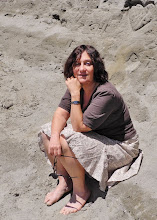
Friday, July 22, 2011

The Two Sides of Mahler

I'll admit. It's not easy to get my husband to consent to an interview—on any subject—let alone the topic of Mahler, especially for my blog. But since he served as concertmaster for the Seventeenth Annual Northwest Mahler Festival, under the baton of eighteen-year-old Principal Conductor, Alexander Prior (who, by the way, is a marvel as both conductor and composer), I have Mahler on the brain. Besides, this year marks the centennial of the composer's death.

So, without his actual consent I took notes on the sly and kept a sheet of paper between the pages of  Norman Lebrecht's most recent book, "Why Mahler? How One Man and Ten Symphonies Changed the World."

Alas! An unauthorized interview with violinist Ilkka Talvi on Gustav Mahler.

The Two Sides of the Critic

I've heard you occasionally compare composers with cuisine. If Beethoven is pasta, as you claim, with long spaghetti-like phrases that sometimes curl, twist and stretch, and Brahms is hearty as a steak or a solid piece of meat, what is Mahler?
Mahler reminds me of Chinese Dim Sum, a meal that lasts for a couple of hours, in which you can't be quite sure what, exactly, you're eating. But that doesn't mean it's not tasty. It's just too much of everything; you might end up with, say, twenty-five different dishes, or a mishmash.

I sense a slight, I wouldn't call it hostility, but an irritation with the excessive performance instructions mandated in the score by Mahler. Explain.
Either Mahler thought the musicians were complete idiots or he felt an intense need to micro-manage every player. For example, there's a long instructive sentence asking to play with utmost force so string vibrates wildly, rubbing against the fingerboard.
So?
For one thing, this result can only be achieved with pure gut strings and a low bridge. How many players today use sheep gut strings? Mahler also specifies "vibrando". You know why?
Is this a quiz?
Orchestras of Mahler's day didn't use vibrato. It was an occasional stylistic device, like an embellishment. That's most likely why the concertmaster of Vienna Hofoper Arnold Rosé, who just happened to be Mahler's brother-in-law, turned down Fritz Kreisler's audition. Kreisler was the first to use constant vibrato in his playing, and the technique was unheard of in those days. As a result, he couldn't get a position in the Hofoper. But today you have orchestras performing Mahler and vibrating like crazy without regard for authenticity.

Your somewhat controversial theory regarding Leonard Bernstein and his promotion of Mahler's music as a means to spur Jewish philanthropic support fascinates me. 
The Bernstein/Mahler combination with the New York Philharmonic was a fail proof recipe for philanthropic success. Bernstein was able to prosyletize Mahler, the Jew, by emphasizing his use of Yiddish folk melodies and familiar Klezmer tunes. This music in combination with Bernstein's charisma, galvanized the support of the Jewish community. Jews from the Old Country needed a musical hero, and they got two for the price of one: Mahler and Bernstein. Suddenly Gustav Mahler had become 105% Jewish. Never mind that the composer had converted to Catholicism. Bernstein intuited that his followers yearned to experience something totally fresh and new with regard to repertoire, rather than being subjected to the same German compositions that reminded them of the past. Bernstein sensed this. The Jewish composer Schoenberg, with his twelve tone technique, would've been impossible to digest, but Mahler—

How did you come up with 105%?
Because with Mahler, the megalomaniac, everything is in excess. Orchestras are going broke; the sheer forces needed to perform his music are budget busters. Megaworks. Obviously they're becoming the property of community and youth orchestras in this country, as it's no longer affordable to produce a Mahler Symphony. Same with Wagner, who, by the way, in spite of his vituperative antisemitic statements about Jews in music, Mahler venerated. Conducting Wagner's music was Mahler's ticket to fame, like the Israeli conductor, Asher Fisch. It all started with Wagner's disdain for Felix Mendelssohn. All because Mendelssohn didn't give Wagner the time of day. Which leads to the paradox; Mahler and his adoration for Wagner.

You seem bothered.
You know what really gets under my skin?
What?
The main thing that annoys me is that all these composers (Mendelssohn, Mahler, and even dear old Fritz Kreisler) were in a hurry to deny their cultural heritage and adopt Catholicism for self-advancement. Putting it simply, Mahler changed his religion in 1897 to get a better gig with the Vienna Court Opera.
You know, I have a vision of Hell.
Oh, what is it?
Richard Wagner is forced to conduct an all Mahler festival, with all ten symphonies, endlessly played by musicians of certain ethnic backgrounds. They have no common language, so the German terms are meaningless. And every single part in the score has been re-orchestrated by Mendelssohn!

What if Mahler were a conductor or music director of a professional American orchestra today; how do you imagine players would react?
They'd go on strike. First of all, Mahler would insist on featuring his symphonic works with endless rehearsals and impossible over-time. And, especially today, orchestra musicians would not tolerate his asinine, autocratic behavior. Most important, they'd expect him to show his directives with the stick, not overload them with verbal commands: "breathe here, slow down there, intermission here to wipe your arse."

Do you think that Mahler would have made a successful fund raiser?
Hell raiser—is more like it.

In a review of Norman Lebrecht's "Why Mahler" by Leon Botstein for the Wall Street Journal, Botstein makes the point that a "troubling aspect of Lebrecht's chronicle is the importance he gives to recordings. Although Lebrecht recommends hearing Mahler in live performance, one senses his passion for Mahler is linked to his experience of listening to the composer's music with headphones or in front of the loudspeakers." What are your thoughts about live versus recorded Mahler performances?
Recordings are an ideal way to listen to the works of both Richard Strauss and Gustav Mahler. Being that they were conductors, and heard their works performed from the vantage point of the podium, they lacked the same aural experience as the concert-goer. For Strauss and Mahler it was up close and personal. When Strauss composes a solo marked "lowest notes sul G in piano" for the concertmaster and the brass is playing at the same time, Strauss's conception was for the violin solo close to his ear, rather than afar, as one can hear on a recording.

In  "Why Mahler?" Lebrecht features an exchange between your Finnish countryman, Jean Sibelius, and Gustav Mahler. They apparently met one time in Finland. Sibelius, who had completed his own Third Symphony extolled the virtues of structural severity. Mahler countered Sibelius with his belief that the symphony must be like the whole world, insisting that a symphony must embrace everything.
And see what happened? Mahler died at age fifty-one and Sibelius (who stopped composing around the same age) lived into his nineties.

Mahler suffered from terrible hemorrhoids.
Mahler was a hemorrhoid. He treated his musicians horribly.

You most recently performed Mahler's Third Symphony, and without going overboard, I'd say your solos were divine. In this symphony, Mahler sought to explain the universe, to find a reason for suffering and misery in this world. Some believe the answer to solving the Mahler riddle might be revealed in Schopenhauer's "The World as Will and Representation," as Schopenhauer's philosophy captivated the composer. For Bernstein, the Third Symphony was not just a pastoral symphony—an answer to Beethoven, but an ecological prophecy. In 1967, Bernstein claimed that it is 'only after we have experienced the smoking ovens of Auschwitz, the frantically bombed jungles of Vietnam, through Hungary, Suez, the Bay of Pigs, the refueling of the Nazi machine, the murder in Dallas, the arrogance of South Africa, the Hiss-Chambers travesty, the Trotskyite purges, Black Power, Red Guards, the Arab encirclement of Israel, the plague of MacCarthyism, the Tweedledum armaments race—only after this can we finally listen to Mahler's music and understand that it foretold all'.

So tell me. What was your favorite moment in the performance of the Third Symphony?
When it was over.

Sunday, June 26, 2011

The Great Piano Heist

I ask my readers: do you remember where you were and what you were doing the day when the local press announced Music Director Gerard Schwarz's retirement from Seattle Symphony? Here's what I recall. I was bent over the kitchen sink peeling potatoes. The phone rang. A symphony violinist drew in a deep breath, paused, and calmly stated, "He's retiring."
"Who?" I asked innocently, but silently hopeful.
"Schwarz," she said. "June, 2011."

I can remember the wheels spinning in my head; 2011 would feel like an eternity, I thought to myself.   It's probably not, dear reader, what you may expect. I waxed nostalgic for a few magic moments after the call, sentimentalist that I tend to be. I remembered some meaningful times from the past, mostly celebratory gatherings; baby showers and birthday parties; a Bat Mitzvah too. I was a mother with two young daughters, but also first chair and artistic director for the Northwest Chamber Orchestra, now defunct, as many other arts organizations will soon be. For example, Bellevue Philharmonic just folded after 43 years. I was also concertmaster of Pacific Northwest Ballet back in the glorious days of Artistic Directors Kent Stowell and Francia Russell. My husband, Ilkka Talvi, served for twenty years as concertmaster for Seattle Symphony and Seattle Opera under Schwarz. Although my husband was an exemplary soldier, you won't hear much about his notable past from the departing one; the epaulets from his uniform were stripped by the commander for reasons that were never articulated, but can be deduced, judging from the outcome of his absence. But listen to the SSO recordings of Diamond and Creston on the Naxos label, with my husband as soloist, and you'll hear a fiddle player of top rank; one that inspired a warm, refined European sound from the strings.

The choice of Mahler's "Resurrection" Symphony as a closing event might have proved symbolic. After all, in terms of morale, the Seattle Symphony—with many fine players—can  now move forward to not only new leadership (the orchestra is simply not the same orchestra as it was when Schwarz first appeared on the podium back in the early 80s), but to a future of civility under the musical directorship of Ludovic Morlot, a 36 year old French violinist/conductor who has already directed the Chicago Symphony, Boston Symphony, and New York Philharmonic. Certainly, Maestro Morlot  possesses a sensibility when it comes to strings, already eager to regroup first and second violins so that the two sections will blend and hear each other, rather than second guess from one end of the massive stage to the other.

Schwarz's tenure lasted exceedingly long (26 years) by industry standards; normal shelf life for a Music Director is about 7-10 years. The retaliation within the orchestra began to resemble a TV crime series, with alleged vandalisms, a dented French horn, and a razor blade found in a mailbox. But to the Seattle masses, Schwarz is an icon, and understandably so. A downtown street has been named after him. One that, I'm sure, many musicians will attempt to avoid, for the sign itself might just trigger a bout of post traumatic stress disorder. One retired musician will have a book completed by this summer's end as testimony to bullying in the orchestral workplace.

Life is never what it appears in the symphonic arena; you can be sure of that. Not a word of gratitude was exchanged after the final rehearsal between the departing one and his followers. Not a simple, "Have a great summer and future" or "Thank you, colleagues, for coping with my didactic approach, retaliatory measures of hiring and firing, not to mention the episode of withholding your bargaining contract from being ratified unless you agreed to my choice of principal horn." Oh yes, and not to forget  the "declaration of loyalty to Gerard Schwarz" the principals were forced to sign back in 2002. (Without that declaration, the Schwarz era might have ended years ago, when his contract was up for renewal.)

With any cult of personality, audiences go wild. Think Adolf Hitler. I suppose the speeches at the final farewell were scintillating. I was told that the applause bordered on frenzy. Schwarz turned to the orchestra on stage—and publicly professed his love to each and every orchestra musician. I'm sure my colleagues felt the loving vibes, and reciprocated whole-heartedly.

Shall we take one final trip down memory lane?

So, what happened next after all the hoopla? Like any other employee, the departing one was required to clean out his office. Seems he went the extra mile with this, too, and performed an exemplary job. Nothing half-way. The Steinway grand piano, which Seattle Symphony claims belongs to the organization (uh-oh) and expects returned, was packed up along with everything else. If lightbulbs were pilfered along with rolls of toilet paper, you know tough times are ahead. Oh, and in case anyone's interested, there's a mansion for sale on Highland Avenue.

Reporting (still alive) from Seattle!


Tuesday, May 24, 2011

The Way of the Conductor

The faithful reader of my blog may wonder what activities I indulge in a few days after a stressful performance, as in down time or recalibration. It would be so easy to beat oneself up over a few silly mishaps during a live concert; thankfully I would never contemplate suicide like the accomplished Israeli violinist, Matan Givol. Matan's death saddens me greatly, though I never met or heard the young man play. I can't help but wonder if he struggled as many artists do—with depression and severe self-abasement. That's one of the reasons that artists must learn to lead a balanced existence with varied interests, and hopefully, find a meaningful personal life outside the professional. I hope, in some small way, that my blog is an encouragement to fellow artists.

I decided to pick myself up from the post-concert doldrums after the Beethoven Concerto episode and engage in one of my favorite past times: bargain hunting. If you happen to venture to our local Goodwill on a Saturday night, just before closing hour, you might find men dashing around in women's clothes and shoes. The atmosphere is fun and upbeat. Last Saturday I found a Mizrahi denim jacket for under five bucks! And the  following day, I visited one of my beloved second hand book stores, "Twice Told Tales" in Fremont. There, while perusing the classical music books, I discovered a treasure: "The Way of the Conductor—His Origins, Purpose and Procedure" by Karl Krueger. I gazed at the title for a long while and thought to myself, I really didn't know that a conductor had a purpose or procedure...Although the book first made its appearance in 1958, you'd think it arrived fresh off the printing press with observations such as this one:
"There seems to exist today a far too general readiness on the part of the public—and among musicians, too—to accept the orchestra for what it was and too little awareness of its changing character in time and place---The few side lights on the orchestra's evolution which have been adduced make it clear that the orchestra either progresses or retrogresses, it cannot stand still."


There's a wonderfully thought-provoking section on the conductor's over-all influence on the orchestra.
"Assuming that an orchestra possesses mechanical mastery, its "sound" will be a projection of the conductor's musicality. And this "sound" is by no means a lasting phenomenon but, on the contrary, it is transitory and fugitive. It is indeed so fleeting that it is the first of the orchestra's characteristics to go when the conductor goes." 

I wonder if this point might be somehow relevant for today's Philadelphia Orchestra. The Philadelphians, under the forty-four year tenure of Eugene Ormandy, and before that, Leopold Stokowski, at the height of its glory, was praised for its lush, opulent sound. I do not doubt that nowadays the ensemble resembles any other first rate orchestra; but I'm not sure it can compete with its own notable past. Which brings me to Stokowski's concept of sound and one of his trademarks: free bowing. You'll find in almost every orchestra (amateur ensembles, too) an almost anal fixation on string bowings (the back and forth motion of the bows—which go either down or up). Stokowski regarded this kind of exactitude as a mechanical effect, while his free bowing style resulted in an unbroken seamlessness and mellowness in the strings that attached itself to the Philadelphia Orchestra. In Stokowski's own words:
"Mechanism as one part of life is wonderful in an automobile or airplane, but not in art, which requires flexible pulsation. When string players are obliged to follow their section leaders and bow up and down bow in unison, they may attain the greatest precision but also the most rigidity and the least expressivity. There are occasions when this military type of uniformity produces just the right spirit, as in a Sousa March. The players of classical music are called upon to convey warmth and intensity and poetic passion which cannot be ideally realized when everybody bows together like robots."

But the tastiest meat of this book, "The Way of the Conductor" is dished up on the final page. I'll offer you a morsel before getting back to whatever-it-was-that-I was-doing to help recalibrate my life and boost mental stability. Young conductors, take note:
"The tyrant destroys, he stifles the invaluable aspiration of the individual player and tramples the unfoldment of his latent powers. And, by so doing, he robs a performance of undreamt-of values. No player can give his best when he is driven, it is when he is intelligently led that he finds himself."

Tuesday, May 17, 2011

Questions and Answers for MKT

As I'll be making my long-awaited appearance this Friday evening as soloist for the Beethoven Violin Concerto with Seattle Metropolitan Chamber Orchestra, after an extended hiatus from concertizing, I decided to grant an exclusive interview. As this is the internet age, an artist no longer needs to wait for a reporter; this is the era of narcissistic self-promotion, remember? So I contacted the journalist myself, and as they say in the biz, made it happen.

Q: How does it feel to be returning to the concert stage? It's been what, 3 or 4 years?
A: Well, to tell the truth, it's a little scary...I mean, I've always had a tendency to freak out, as noted in my memoir, Frantic. And, like athletes, instrumentalists can atrophy. Also, we age.

Q: What are your fondest memories of performing the Beethoven Violin Concerto?
A: Well, I have two that leap to mind. The first, of course, was an appearance with Orchestra Seattle under the leadership of beloved George Shangrow at Meany Hall. I was amazed with George's musical intuition, for he was with me at every twist and turn. The other time—now this goes way back—was at Peter Britt Festival, where I served as concertmaster. I performed the Beethoven with James DePreist outdoors in 110 degree heat in Medford, Oregon. I glanced at my fingers which swelled to the size of sausages. Want to know a secret?

Q: I love secrets. Dish—
A: I was so intimidated by DePreist (but loved him and still do), that I begged: Don't you dare watch me during the cadenzas!

Q: Did DePreist oblige?
A: No. He peeked. Rascal.

Q: What is your regimen during the weeks prior to your performance?
A: I nibble on my nails, and read, read, read and listen, listen, listen and practice, practice and practice. Alternate between coffee and wine. Snack. In other words, I obsess furiously.

Q: I understand you're married to violinist, Ilkka Talvi, of Men and Music fame?
A: Yes!

Q: And? Does he offer suggestions? Musical expertise?
A: Oh indeed. He reminds me of the concert which he attended in Vienna of David Oistrakh performing the Beethoven Concerto. Ilkka counted no less than eight memory lapses at that performance. He reminds me of this repeatedly, to test my patience, because memory loss is one of my biggest fears. But Ilkka awakened me to the beauty of Fritz Kreisler's recording. And you know what? It has transformed my concept of the entire work. The transcendent humility, nobility, pacing, spirituality, and technical perfection. I'm profoundly indebted to Fritz Kreisler. I would drop everything to listen to that great violinist play. We're most fortunate to have those archival recordings available.

Q: What other performers have influenced your Beethoven concept, at least, recently?
A: Well, I went and played for my esteemed colleague, violinist Sharan Leventhal, while she visited the west coast. It's interesting. Sharan made a few comments that have really taken hold.

Q: Please. Continue.
A: The Beethoven Violin Concerto is a symphony, she said. Now I knew that, of course, but needed to be reminded—for strength and command. My playing was too submissive. Sharan dropped the magic word.

Q: Abracadabra?
A: No. Heroic. The concerto begins with a military drumbeat, which I liken to a heartbeat, because when I wake up in the middle of the night in terror, that's what I hear; my own rapid heartbeat. But you know, the mere concept of heroism turned my thinking around. I started digging through books on Beethoven. I'm reading Schiller's "Aesthetic Essays" as Beethoven himself did. I recognize now the triumphant spirit in the concerto. It's a testament for the human being who has struggled, suffered, and will emerge  victorious in the end.

Q: You showed me the copy of your score. It's—well, quite messy.
A: Yes, I know. My mother was a collector of old sheet music, and I inherited this copy from her. You know, it's so old that the paper seems to dissolve in my fingertips. But, I love this edition. To me, it resembles a fragment of the Dead Sea Scrolls. Beethoven brings me nearer to God. This is difficult to explain. Please excuse me for my rambling. That being said, my dear cellist friend, Daniel Morganstern, reminded me that the performance this Friday is not Judgment Day. And he told me to imagine that long entrance, the orchestra tutti, and practice the opening over and over again, to develop thought control.

Q: What is your opinion about the new group, Seattle Metropolitan Chamber Orchestra?
A: I feel very connected to this ensemble. The music director, Geoffrey Larson, is a major talent and a delight to work with. I might add that my former pupil, Andrew Sumitani, will be first chair for this concert. If I have a little trouble, maybe he'll just play my part?

Q: Really?
A: That was supposed to be a joke. In other words, I'm surrounded by good vibes.

Q: Any final thoughts?
A: Please join me Friday evening, May 20th at 7:30 with Seattle Metropolitan Chamber Orchestra at  Seattle's Daniels Recital Hall for an evening of Haydn, Handel and Beethoven.

Thursday, May 5, 2011

Growing Pains

I suppose all the hoopla surrounding Artistic Director Roberto Minczuk and Brazilian Symphony Orchestra (OSB) might be considered orchestral growing pains. The OSB, in an effort to improve its product has declared, not bankruptcy, but a thorough re-evaluation process of its employees, and as the players are not tenured and the orchestra is backed by a group of private investors, they have the right to proceed. Orchestra musicians, like school teachers, or for that matter, any skilled laborers, are not uniformly competent. To make matters more complicated, some have received their positions through the back door as opposed to standardized auditions. Minczuk speaks out here.


I recall a number of seasons that I spent devoted to a professional chamber orchestra in Seattle. Sadly, the organization was later to file under Chapter 7 in bankruptcy court. Although there were no contractual stipulations regarding  seating of section players, colleagues were adamantly opposed to re- assessments.  For example, although a couple of violinists might have been more effective in the seconds as opposed to the firsts, the musicians held their hands up to their ears and shook their heads "No". They wouldn't hear of this. And conversely, a second violinist was discouraged by colleagues from switching to the firsts, even though the over-all sound of the orchestra might have been enhanced. The reason? Any shift in position might have been perceived by the public as a demotion, even though, a second violinist's contribution is of equal, or perhaps greater value to an ensemble, as one must develop strong intuitive powers for the supporting role.

The entire chamber orchestra suffered as a consequence, for by grinding its heels and resisting change or growth, the group resolved to maintain a status quo which was definitely, inarguably substandard, unworthy of donor support; the ensemble was deemed unfit for international stature. With all due respect to my former colleagues, a complete re-evaluation of the orchestra might have offered a life-saving measure and prevented the demise of a thirty year institution which was on the cusp of development.

I recall the words of a wise colleague suggesting that orchestral musicians might open their minds and hearts by engaging in a spirit of willingness to experiment with different strategies. For if one refuses to recognize and honor the superior talents and abilities of a colleague or colleagues, and deny those who are deserving of opportunities a foot in the door, might that be unjust? Is it fair to relegate young talents to the periphery? Might one also make a plea for the booking of fresh soloists rather than the predictable, overpaid few?

In response to warnings of boycotting upcoming auditions for the Brazilian Symphony Orchestra, here is a copy of the letter from the BSO Foundation. Please take a moment to read and share.


To The International Federation of Musicians 
Dear Sirs, given the recent demonstration of the FIM on the international auditions of the Brazilian Symphony Orchestra and in deference to the work and representativeness of the Federation, we have provided some clarification regarding the restructuring process by which the orchestra has been through in the recent months.
We understand  that the “Call for an international boycott” to the orchestra  auditions reflects a biased interpretation of recent events, to reports released on the Internet that often go beyond and distort reality. In respect to the International Federation of Musicians, we want to position ourselves not only in relation to the process that led to the removal of some of our musicians, but also to clarify the basis on which the new auditions for the orchestra are organized.
Fidelity to the institutional mission to build a culture of excellence around the symphonic music in Brazil led the OSB  Foundation to invest in qualifying and broadening its work in 2011. The implementation of performance evaluations for the orchestra was a decision of the Foundation in order, along with the continuing evaluation that takes place in rehearsals and concerts, to recognize the artistic demands of each member of the group, provide suggestions for individual improvement and ensure best conditions for the work of the orchestra.
As emphasized since the announcement of the evaluations, the process did not seek the dismissal of musicians, but a real examination of the artistic situation of the OSB from a feedback on the performance of each member, who also served as official means for repositioning the musicians in their sections.This action was reported earlier this year and, and until the scheduled time for conducting evaluations, some of the musicians of the orchestra had showed dissatisfaction with the OSB Foundation’s decision.
In many negotiations, the Foundation sought to reach a consensus with this group of musicians, meeting with requests such as reducing the required repertoire for evaluations. The FOSB remained steady in relation to the indispensability of evaluations to continue its artistic development, but relaxed various aspects to ensure the fairness and legitimacy of the process with the musicians. No decision taken by  the FOSB, however, was good enough to meet the needs of this group of musicians, and the worsening relationship with them eventually led to their removal.
The Foundation resisted the most to this extreme alternative, which became the only one possible, given the context of insubordination and public defamation, in which it found itself inserted.The chronological report, which is found attached, shows details of the entire process. After the removal of the musicians, the OSB Foundation also undertook a last effort to resume negotiations and reached a consensus with the group about the necessity of the existence of evaluations. Given their requests, we designed a new format for the evaluations, to be held in June, and prepared a final proposal which called for the immediate reinstatement of all of them.
However, from that time on, the musicians have started to pressure the Foundation no longer about the evaluations, but on a point that was non-negotiable for the institution: the permanence of conductor Roberto Minczuk at the  position of OSB Artistic Director and Principal Conductor.
All attempts made by the OSB Foundation in order to circumvent this situation were not taken, given the requirement of the musicians in dismissing the artistic director of the orchestra. Thus,  a polarization of the debate and of the public opinion has been tried,  by shifting the attention from the primary focus: to raise the quality standard of the orchestra, which should be its irrevocable and continuous mission.
In five years under the artistic direction of Roberto Minczuk, the OSB has seen its annual budget leap from US$ 4 million to US$ 22 million, expanding its schedule of concerts and raising substantially the overall sonorityof the group, as it can be certified by the testimony of any reviewer who follows the work of the orchestra. The undeniable progress that have been made in recent years underlies the support from the OSB to the artistic project signed by the conductor for the orchestra, which is not guided by what has hitherto been obtained, but  by  the commitment to develop and further enhance this work over the next five years.In such circumstances, the Foundation made  a clear choice to go ahead in the qualification process for its music and its own organizational culture.
Just remember the pressures of  the  musicians  on  the artistic directors  who preceded Minczuk. By refusing to accept one more constraint from part of its orchestra, the Foundation seeks to break with old institutional vices and strengthen a path in which the value of each musician resides in their own professional merit.That is why the International Selection Process calls for new musicians to the artistic and institutional design of the OSB. For years, we have had about 13 open positions in our orchestra, and that number was recently widened with the removal of the musicians who did not wish to follow the work of artistic enhancement of the OSB.
A total of 33  openings in various instruments are being offered by the Selection Process, with conditions of competitiveness in the international concert music market.By clarifying the whole process that led to the  removal of some musicians, we would like to draw the attention of the International Federation of Musicians, not only to the legitimacy of the OSB Foundation’s actions, but as well to the effort in order to build a culture of excellence in  the Brazilian symphony music. The auditions that will take place in Rio de Janeiro, London and New York in the coming weeks represent another step in this direction and we await the review of the FIM on the organized boycott to the OSB Selection Process.
Sincerely,
BRAZILIAN SYMPHONY ORCHESTRA FOUNDATION
artwork by Scott Gustafson

Thursday, April 14, 2011

Brouhaha in Brazil

Roberto Minczuk
After sorting through much of the dirty laundry in the Brazilian Symphony Orchestra (Orquestra Sinfonica Brasiliera) on Norman Lebrecht's Slipped Disc, I've come to the conclusion that many orchestral musicians are afflicted with group think and a heightened sense of entitlement. In an effort to raise the collective artistic quality of the Brazilian Symphony Orchestra to an international standard of top rank, music director Roberto Minczuk (protégé of Kurt Masur and artistic director of Theatro Municipal do Rio de Janeiro) and the Board of OSB proposed an equitable re-evaluation procedure for the entire orchestra, an ensemble plagued by insufficient artistic level.

After the organization celebrated its seventieth anniversary, fiscal conditions changed for the better, due  to the sponsorship of private investors. These improvements now include a contract offering over 50 percent raise in salaries, a broader concert season, and an entire series devoted to chamber music, to be performed by all members of the orchestra.

Prior to 2006, auditions were held informally without adherence to industry standards, including the behind-the-screen aspect which is integral to impartial hiring. This lackadaisical and misguided approach resulted in the admittance of a number of substandard players. It might be noted that the privately funded Orquestra Sinfonica Brasiliera, in accordance with the Constitution, does not offer possibility of tenure. They are not breaking any laws here.

What I find admirable, is that rather than singling out individual players or turning colleagues into denouncers, or firing musicians for reasons that might be construed as personal biases, the Board of the Brazilian Symphony Orchestra Foundation has insisted on a formal screened evaluation process; one that, in my opinion, appears to be completely ethical; a five-strong panel comprised of impartial, leading musicians from the United States and Europe are to offer performance evaluations and constructive feedback for all musicians. Side note: the OSB members were given a month of paid vacation, in addition to the regular vacation of 41 days, to dedicate themselves fully to the audition. A letter to the orchestra members by  Minczuk stated that none of the re-evaluation participants would be dismissed; only those who refused to audition would be let go; and this, in fact, has happened. Those who refused to audition were promptly dismissed. In his letter to the orchestra, Minczuk also stated, "We are fully aware that musicians that have been playing in the group for more than twenty years might not be in the same shape as younger players." Age itself would not be a liability.

Why do I react strongly in favor of this particular re-evaluation method? I'll tell you. Although principal players might be exposed during performances, that is not the case with the protected class of section musicians. Obviously, instrumentalists that were below par at the onset cannot suddenly catapult to top notch level by magical thinking. This begs the question: Why is it that in most other institutions, corporations, and organizations one is expected to submit to routine evaluations, but your average orchestral musician deems such a process "unfair"? Could it be that the loudest opponents sense the unveiling of a new business model—one that offers competitive standards?

I wish Maestro Roberto Minczuk strength on the podium in the face of entitled, self-satisfied group thinkers.


Tuesday, April 5, 2011

Bad Boy of Music

Perhaps you've heard the adage, "tell me who your friends are, and I'll tell you who you are".  George Antheil (1900 -1959) the self-proclaimed "bad boy of music" from Trenton, New Jersey kept close company with James Joyce, Pablo Picasso, Ezra Pound, Man Ray, Aaron Copland, George Balanchine, Jean Cocteau, and of course, his idol, Igor Stravinsky. After compositional studies with Ernest Bloch in New York City. Antheil spent most of his time in Europe from 1922 to 1933 before returning to Hollywood to work in the film industry. His well-known film scores include “Dementia”, “Once in a Blue Moon”, and “The Plainsman”.

In his autobiography, “Bad Boy of Music”, Antheil describes that in art, there have been but two basic phenomena, an inhalation and an exhalation. The first produces one series of art movements—among which we can include the so-called “classic”. It inhales, pulls in, restricts. The second produces an equally different general kind of art—into which we may place “the romantics”—Art remains healthy and alive only so long as its normal in-and-out breathing is not too long restricted—Art cannot hold its breath too long without dying. In the Sonatas for Violin and Piano featured on this disc, including the world premiere recording of the unfinished Sonata for Violin Solo (1927), superbly rendered by violinist Mark Fewer, Antheil proves an innovative and imaginative forerunner of today’s eclectic modernist composers.

It was in Paris that Antheil described his works in time-space terms; the new fourth dimension of composition; the machine music of the future. George Antheil infused his works with the wild rhythms and raw vitality of modern machinery and industry. In “Ballet Mécanique”, a composition which caused pandemonium in Paris, the piece was scored for ten pianos, one mechanical piano, six xylophones, two bass drums, a wind machine with a regulation airplane propeller and a siren.  His radical mixture of jazz, discords, and cacophony caused him notoriety. Antheil’s original title for the work might be revealing: Message to Mars.

Antheil’s two first violin sonatas (1923) were commissioned by Ezra Pound for his mistress Olga Rudge, a fine concert violinist, originally from Boston, renown for her dark beauty and penetrating lower register on the violin. While concentrating on the First Violin Sonata,  Antheil faced a period of intense, compositional writer’s block. It was during that time he set out for the exotic land of Tunis, and consciously absorbed the local Arabian music handed down from the centuries. This adventure ultimately enabled him to add more timbrel effects to his writing and break away from Stravinsky’s grip. He returned to Paris revitalized, and completed both the First and Second Violin Sonata. Both works are filled with dissonant melodies, parodies of popular folk songs, and a sense of humor.  

The performance on this CD by violinist Mark Fewer and pianist John Novacek is first rate. Both artists convey the versatility, intensity and dynamism inherent in Antheil’s eclectic style. Fewer and Novacek switch effortlessly from the primal pounding rhythms inspired by Stravinsky, which obviously require much stamina, to the pastiche of ragtime, vaudeville, tango, tin pan alley, fox trot and jazz. With incisive and well-muscled playing, they captivate the difficult effects required in Antheil’s compositions. The range of both instruments are pushed to the limit—hand clusters and glissandi on the piano, and unconventional sound effects, including arpeggiated chords played percussively behind the bridge and non-pitched scratches from the violin. For sheer virtuosity and panache, this recording is a towering achievement.

Thursday, March 31, 2011

Dubious Deals

photo from newimagecostumes.ca
This morning I glanced at Norman Lebrecht's breaking news on Slipped Disc and almost fell off my chair: Swiss police arrest major violin dealer. You can read all about it in The Strad publication.

Ilkka and I had some interesting experiences with violin dealer Dietmar Machold beginning in 2000. He ventured to Seattle from Vienna with a few instruments including a couple of Strads. As Ilkka and I were both concertmasters of the local orchestras, Machold suggested that we perform at various events using one of his Stradivarius violins. He was wooing a group of local investors into jointly purchasing the instrument which was price-tagged in the millions. And with Machold's soft-spoken, European charm, most found him to be irresistable.

We were allowed to borrow the violin on one condition. We'd be "on call" to play the Strad and talk up the instrument's rare qualities at unique functions arranged by Machold Rare Instruments and his Seattle lackey, a colossal egotist. This way we'd be free to play the violin whenever we desired. Ilkka, with his dog's sense, smelled a rat immediately. In terms of sound the Strad was way past its prime, crafted prior to the luthier's Golden Age; certainly not worth the hefty price tag. It was obvious that the instrument had been thinned (which shortens the life span) and revarnished to the point that it gleamed. I have an unpleasant memory of playing the Strad at a private luncheon for local bigwigs. A drunken philanthropist reached up after my performance of unaccompanied Bach and thrust two hundred dollar bills down my bra. Someone had to pry him away, possibly his wife. As it turned out, there were no buyers here in Seattle, and for a short duration Machold, his lackey, and the over-priced violins were out of our midst.

Then a funny thing happened on the way to Carnegie Hall. My husband was ordered by the Semi-conductor to play on one of Machold's other violins—a Guadagnini? Gagliano?—(can't seem to recall) for purposes of generating interest with local investors for the orchestra. The instrument was initially spotted in the hands of the conductor's protégé during 2003 season, but even she rejected the violin, sensing that it was seriously flawed. Since my husband was told that he had to perform with this particular instrument on tour, he looked for an obvious way to boost its tired croaking sound. Ilkka finally settled on a shoulder cradle which, by its design, actually amplifies the tone. But, wouldn't you know, he was ordered by the conductor to "play softer"and thus, placed in a disadvantageous situation in performance against the entire orchestra.

A few years later, Machold's reputation was tainted when New Jersey Symphony led an inquiry into the  collection of "rare" instruments sold to them by Herbert Axelrod. The inquiry was focused on whether Axelrod had knowingly inflated the value of instruments as a means of padding his tax deductions. The appraisals were performed by none other than Dietmar Machold of Machold Rare Instruments. Some of the appraisals were indeed found false.

In 2005, Herbert Axelrod was sentenced by U.S. Court to eighteen months in prison for tax fraud.

Tuesday, March 29, 2011

Music Worth Remembering

I still remember the day I returned home from an errand and switched on the television to the local educational channel. On the screen was a baton wielder in the midst of an interview relating his connection to the Holocaust; he had recently composed a work in memory of his grandparents that were murdered in Riga. I examined the familiar, round, jovial face on the screen and asked myself: How could someone who had personally suffered the legacy of Nazi extermination through familial relations perpetuate the sardonic action of banishing colleagues? At various times during my career, I've been struck by the sad realization that the oppressed can, and often do, turn into oppressors themselves.

By now the world is well aware of the injustices heaped upon not only Jewish artists during the Holocaust, but the decent souls who stood in the line of their defense. Clearly, to deny an established and well-respected artist the right to work, or to be heard and read, as in the case of Viennese author and playwright Stefan Zweig, is to blot out his identity and existence. We know that all of humanity stands to lose when its creative forces are silenced. One cannot help but contemplate the amount of sheer talent and genius that was extinguished at the self-destructive hands of the Third Reich.

Recently I reconnected with Bob Elias, President of The OREL Foundation. I clicked on this site and listened to an audio welcome by founder and artistic director, James Conlon. The OREL Foundation, through their website, is devoted to providing a resource for scholars, musicians, and music lovers. Its aim is to inspire further research and performances of music by composers banned and suppressed from 1933-1945. I couldn't believe the wealth of material on this website available for exploration.

The Dwarf: Rodrick Dixon (L.A. Opera)
As I perused this repository of musical treasures, many of which were unfamiliar to me, I felt a yearning to surround myself with more books and materials devoted to this important subject. For starters, I viewed the live Los Angeles Opera production of Viennese composer Alexander Zemlinsky's one-act masterpiece, "Der Zwerg" or "The Dwarf" based on Oscar Wilde's fairy tale "The Birthday of the Infanta" on DVD. The story is about a cruel and spoiled Spanish princess "Infanta" that is sent an ugly dwarf by the Turkish sultan as a gift for her eighteenth birthday. The dwarf has never been allowed to see his reflection in the mirror; therefor, he is unaware of his hideous appearance and believes that others laugh at him because they are charmed by his good nature (God has created us all blind to ourselves). As the princess coyly pretends to be enchanted by the dwarf, even teasing him about prospective marriage, he falls hopelessly in love with her. When the dwarf ultimately sees his reflection in the mirror, and learns the cruel truth, that he's a hideous monster and has merely been a plaything, he convulses in despair and dies from a broken heart.

Zemlinsky's expressive score is spell-binding. Orientalist idioms recall those of Mahler and lighter sections, those of Lehar. The music is perfectly suited to Wilde's fairy-tale plot, although the opera's psychological complexity might have been somewhat of an obstacle to its initial success. Ridiculed for having been "ugly as sin" and referred to as "the gnome" by his lover, the Viennese femme fatale, Alma Schindler (who later married Gustav Mahler and a few other leading men), "The Dwarf" might be the closest window we can crack open to probe Zemlinsky's wounded self-image. Although he emigrated to the United States in 1938 to join his brother-in-law, composer Arnold Schoenberg, after having witnessed strong anti-semitism in Vienna, Zemlinsky lived out the remainder of his years in relative obscurity.

My exploration continues. In the next day or two, I'll receive Franz Schreker's "Die Gezenchneten".
I fell madly in love with this prelude. Listen yourself. You might catch strains of "Star Trek: The Movie".

Wednesday, March 9, 2011

The Turning Point

My memoir "Frantic" seems to have resonated with an astonishingly gifted eighteen-year-old violinist from the Iberian Peninsula. He reached out to me with these words: Having come across your memoir and being currently in the process of reading it, I found my heart sinking at numerous passages, both the ones whose situations I could relate to and the ones I never came close to experiencing.


My new reader, from the age of four, has been molded into an accomplished violinist having made his debut at the age of eight, and now, is a full-fledged artist; I listened with admiration to a recording of the Tchaikovsky Concerto he sent this way. This young man became a violinist, in part, to please parents and esteemed, highly sought-after mentors for he is bestowed with natural abilities. But like most teenagers, he is now conflicted by the toll and demands the art form snatches from his youth. I find myself reading his words as if from a page of poetry. My spirit connects with his as he unburdens his heart:
My violin teacher asked me what my free time was like, and it was then that my blood completely froze. I loved music, but music is about life; in Zigeunerweisen are the bonfires of the Gypsies, in Beethoven's Spring Sonata the Viennese gardens. I couldn't give up on life—i.e., my precious free time—for the sake of those dreaded scales and exercises! It would be like tearing down a house, regardless of its cracks and paint smears, in order to labor tirelessly and put up the flawless painting of a house in its place. What for? I could certainly not live there.


And a bit later, a probing assessment:
I've met more stressed than happy musicians. I've met the accompanists with fully booked schedules and piles of sheet music to learn, the orchestra musicians with long rehearsals and back pain, and many of those people who studied hard in the most prestigious schools. What for? The fact that music, a food of the soul rather than a cold austere exact science, must be worked for the same way (or maybe more so) as accounting or engineering is a disheartening concept to grasp, one which may often miss the perception of general audiences, but which I, as a supposedly aspiring musician, can't hope to neglect if I really am serious about what lays ahead of me. And why I ought to be serious is the question that plagues my mind daily.


Since my memoir "Frantic" concludes at about the age of this reader, he asks that I expand upon the experience of studying with Jascha Heifetz, and what my present perspective is regarding the classical music profession. I will happily oblige for all readers out there, young and old.

In the final chapter of "Frantic" Jascha Heifetz enters the class nonchalantly and remarks off-handedly that all human beings are members of the animal kingdom. I believe Heifetz was attempting to set the record straight; to level the playing field; in class, we were all to be equals, including our mentor, the legendary Jascha Heifetz himself. But then, with a light touch of humor, he directed the class to acknowledge that unlike animals, or the herd, we were each responsible for our own actions. With Heifetz, every single facet of his life appeared to be a conscious act of will and self-determination. Though he may have felt nervous prior to performances, he imparted this message to students: If I do not display confidence in my work, who will have confidence in me? Before launching into a scale, he'd warn: Don't be afraid of the scale; make the scale afraid of you! He seemed convinced by the power of mind over matter as a means to prevail over impulse; he recognized the force of opposites; the triumph of the spirit. Heifetz was not to be duped. I was dismissed from the class, along with several other members at the end of the year, in part because (as my young reader might best comprehend), Jascha Heifetz felt that I was conflicted about becoming a violinist in the first place. That ambivalence manifested itself in my temerity during class. The choice of becoming a violinist had not been mine, he noted; I was the vessel for my mother's musical desires. Heifetz then advised me to depart from the class and sort things out for myself.


My young reader and I agree that to become a classical artist might be compared with the priesthood or  ministry. It is fair to conceive of music as a calling. In a marvelous book about Yehudi Menuhin by his nephew, the Los Angeles writer Lionel Rolfe, entitled "The Menuhins: A Family Odyssey" it is revealed that Menuhin was a direct descendant of Russian rabbis who created the mystical sect of Judaism known as Hassidism. Rolfe describes his uncle as having been a kind of latter-day musical Baal Shem, the 18th century Russian Hasidic prophet. For Menuhin, playing the violin was a spiritual quest; his life was one of sacrifice devoted to the service of mankind through art. Practicing, like the call to prayer, was a  pursuit leading to his own enlightenment and through performance, an offering of glory to the world.

We cannot all be like Heifetz or Menuhin, of course. In response to today's consumer driven, technological absorption, it might be wise for a talented young artist to think long and hard about the bumpy road that lies ahead for the future of the arts. I secretly wonder whether Heifetz or Menuhin would have succeeded as concert violinists in today's superficial, self-centered culture.

Saturday, March 5, 2011

Terminator One and Two

The classical music scene is shifting in Seattle. As the final weeks of a musical leadership draw to a close (but not soon enough), our phone machine is filled with deliriously happy messages from colleagues, near and far.
"He's leaving...finally," blurts one musician, "and his cronies along with him! That player just resigned...but we all know what that term 'resignation' really means!"
Another message.
"Break out the champagne! It'll be a new dawn; a psychological cleanse; c'mon; we'll heal together."
Another.
"There'll be one hell of a party sailing around Lake Washington. Soon! Let's begin the count down. But don't you even think about bringing a cell phone to this one!"

I open my e-mail and find copies of recent press releases with glowing praise for a first chair player stepping down. My, how the organization displays its double standards!  Back in the days when my husband served as concertmaster (for over twenty years), and was illegally terminated, he wasn't the recipient of praise or gratitude from the media, but the victim of harrowing abuse, thanks to the terminator himself, who appeared to have an agenda of destroying our livelihoods for the sake of his favorite.

I'll let it be known that my husband never required multiple takes for violin solos during recording sessions. With the clock ticking (every minute is very costly to a symphony orchestra) and displaying the composure of a brave Finnish soldier, I recall hearing only words of praise from the terminator for Ilkka's astonishing ability to nail difficult solos in one smooth take. Then, of course, there was the work ethic. I believe it's an inherited trait from a long line of hard-working Finns; I witness this marvelous attitude through our own children. The unspoken rule is that one never calls in sick unless one is practically slumped at death's door. Organizations might do well to applaud employees with such commitment and honor them, rather than giving them the boot.

Unlike others in the orchestra milieu, Ilkka never abused the system. Take, for example, an ingrown toe-nail, lack of night's sleep, or tooth-ache; none of those would have qualified as legitimate reasons to take time away from work, as it has for others.  It goes without saying, that he'd never have failed to show up ten minutes prior to a concert just to spite a soloist.

And another thing. (You can tell I'm all keyed up this morning.) My husband didn't have it in him to blow the whistle on colleagues; to be a kapos; to wield a stick over others and browbeat them. No. The boss was out to terminate a couple of naughty violinists and Ilkka wouldn't comply. Let's just say that complicity is not his thing. Perhaps someone else in my husband's position wouldn't have thought twice about destroying others, and perhaps such a fembot actually took over my husband's position. Perhaps a battle was won but the war was lost. Might it be that a few got a taste of their own medicine, finally?

It is said that what goes around comes around. Law of Talion. Talvion.

Friday, February 25, 2011

Sharan Leventhal and the Kepler Quartet

Violinist Sharan Leventhal
When I was a youngster attending Ivan Galamian's string camp Meadowmount, I was initiated into the wonderful world of violinist Sharan Leventhal. She was a couple of years older than myself, and had a unique talent for sparking everyone's imaginative capabilities. I seem to recall that I could visit her room in Main House anytime during practice hours—an action that was strictly forbidden—and she would take me on a journey through the Bach A Minor Concerto, which all of the young violinists were expected to learn; she'd practice alongside of me. When Sharan played Bach's music, there was so much vitality that you could visualize the composer as a mischievous, fun-loving friend rather than a stuffy periwigged bust on the mantelpiece. There was a seductive quality to Sharan's practice technique. After an adventure with Bach, she'd segue right into "Turkey in the Straw" and cause me to double over with laughter. She'd then conclude our practice session with "Hot Canary".

I still consider Sharan Leventhal's room at Meadowmount to have been the gravitational center of the Main House activities. I'll never forget when I entered one day during off-limit practice hours, and found her engrossed in painting the white blank walls with a fantastic array of blues and greens for an ocean scene, complete with a marvelously voluptuous orange and yellow mermaid. "Sharan, won't you get in trouble for this? I mean, it's against the rules to paint the walls, and you're supposed to be practicing!" But she shrugged and proceeded to pencil sketch a giant starfish with surrounding exotic sea-life, and then resumed painting. Before long, the room was awash in color, like her imaginative violin playing.

Then, of course, there were the nightly seances, after curfew, that Sharan hosted in her room in secrecy. We must have spent countless hours trying to contact the spirit of actress Sharan Tate, murdered by the Charles Manson gang, and other dead souls. I tried to channel my grandmother that summer but to no avail. Sharan had a penchant for delving into other-worldly spheres, perhaps an early indicator of her keen interest and dedication to unconventional and non-traditional music, as well as the talent she has for breathing life into standard repertoire.

In a recent telephone call to her home outside of Boston, where she teaches at Boston Conservatory and Brandeis, I inquired about her latest musical endeavors. I heard the enthusiasm in her voice as she described her commitment to performing the works of living, breathing, vital composers. She has premiered the violin concertos of Bob Aldridge and Scott Wheeler, to name a few.

With her colleagues from the Boston Conservatory, second violinist Eric Segnetz, violist Brek Renzelman, and cellist Karl Lavine of the Kepler String Quartet, they have just released the second of a series of American composer Ben Johnston's quartets for New World Records. The Kepler Quartet was formed specifically for the preservation and presentation of this large body of work. "Making these recordings was an exploration along the lines of discovering the North Pole or being the first to climb Mt. Everest," she said.

The first composition presented on this new release is Quartet No. 5, based on an Appalachian gospel tune, "The Lonesome Valley". The extended just intonation in this work offered composer Ben Johnston an opportunity to present harmonic, melodic, and contrapuntal textures using a mutable tuning system. This type of tuning lends the music a strange quality, meant to evoke Psalm 23 in the Old Testament: the valley refers to the valley of the shadow of death. So haunting are the actual sounds, that I feel as if I'm  experiencing my own dissolution and death.

In the tenth Quartet, the work opens with a jazzy polyrhythmic style (the first violin and cello are out of synch with each other) while displaying a harmony that is tonal but extended in a playful way. In one dazzling passage, the first violin launches into a  riff that recalls the naturalness and ease of my favorite Jazz violinist, Stephane Grappeli. The shimmer vibrato and lush tone that Sharan infuses in her solo line emphasizes the characteristic bold colors of her playing.

The final quartet featured on this disc, "Nine Variations" is avant-grade, as Johnston composed the work in his early thirties and used the technique of serialism. There is no theme in this work. The nine movements alternate between slow and fast, calm and energetic. Although I'm not enamored of these  variations...yet...they do encourage the listener to hear music in a different way through silences, shrieks, and utterances.

I found my husband Ilkka's reaction to the disc most interesting. Blessed with perfect pitch and  synesthesia (the mixing up of senses) he hears pitches accompanied with visions of colors. I begged him to come down to the studio and listen to a few movements with me to find out which hues flashed through his mind. As he listened to the assortment of these non-traditional tones with the expanded pitch vocabulary encompassing 150 steps into an octave rather than 12, he suffered a bout of sensory overload and panic attack (similar to what he experiences in shopping malls), and, before I knew it, fled the studio!

Tuesday, February 22, 2011

Winter Conversations for Two Violins

I became acquainted with multi-talented composer Elaine Fine through her marvelous blog Musical Assumptions. It is a treat for me to begin my mornings by reading her posts which reflect her broad and diverse understanding of the fine arts. Although we grew up in the Boston area around the same era, our paths hadn't crossed as youngsters. I suppose that might be because my mother schlepped me back and forth to New York City for all-day classes at Juilliard Pre-College while Elaine participated in Greater Boston Youth Symphony Orchestra activities.

When I published my blog Frantic many of my characters, such as Sarah Scriven and Harry Ellis Dickson, had significant influence during Elaine's youth, as she is the daughter of Boston Symphony's former principal violist, Burton Fine. After reminiscing about our mutual experiences over the internet and by telephone, we struck up a delightful friendship. One day I told Elaine that although I physically reside in Seattle, my emotional ties in music are elsewhere. I shared with her the turmoil that became our reality in 2004 at the behest of a local conductor and his cronies. From that year forward, local colleagues became, in my eyes, betrayers, especially after I was forced into resignation from the ballet as concertmaster. Ilkka and I were no longer invited to partake in most musical events; we felt like characters in a "Twilight Zone" episode or Kafka novel, not knowing what, exactly, we had done to deserve such mistreatment. Regrettably, it's not unusual for the victim, rather than the tormenter, to blame him or herself, and I explained to Elaine that for years afterwards, I avoided social interaction all together.

Perhaps because Elaine witnessed factionalism in the professional orchestra through her father's prominent position, she empathized with what Ilkka and I had experienced. She reminded me to focus on music's true mission, as a means of ennobling and healing the human spirit. I have grown to accept and recognize that there is more out there, much more, than being a cog in the wheel, or an orchestra musician. Each one of us holds a key to enrich the lives of others.

Elaine Fine has composed a set of "conversations" for two violins specifically tailored for us. It is a delight to delve into fresh compositions. As I've mentioned before, to introduce new works is a bit like being a midwife in the birthing process; each composition reveals its own personality like a human being. The first work in the series recalls to my mind elements of Bartok's style; the second is a fusion of a Finnish folk-song and Yiddish melody.  I requested that Elaine not go easy on us technically; we love for ourselves and students to be challenged! In the third of the series, which is yet to be recorded, she weaves in the vitality of a Wieniawski Caprice with Chopin, and in the fifth, Elaine suggests the Norwegian composer, Edvard Grieg stylistically. For some reason, the fourth conversation, a hauntingly beautiful dialogue which evokes Jewish neshama or soul, just moves me to tears. Here it is:

Wednesday, February 16, 2011

Remembering Sidney Harth

To colleagues and students, his name might have been Sidney Heart. After learning of the death of violinist and conductor Sidney Harth, I recall with fondness his years as Music Director of the Northwest Chamber Orchestra during the late 80's and early 90's. Initially, I felt a certain amount of apprehension at his appointment; I was, after all, a relatively young concertmaster; it may have been somewhat intimidating to have had a preeminent violinist loom in front of me on the podium. Similar in physique to the Belgian violinist Eugène Ysaÿe, Harth could pick up his violin and make everyone around him appear as inadequate students. But he never demeaned or belittled any one of his colleagues. What I sensed while working with Sidney over the years was a man of limitless understanding, a paternal figure willing, at any moment, to encourage and support a friend, student or colleague.

True to Sidney Harth's generous character, he offered me a solo opportunity every year with the chamber orchestra, though, I'm sure if he had wished, he could have performed the entire violin repertoire season after season. But I remember how he insisted that a concertmaster must enjoy first dibs at solo opportunities; at least Sidney had over the years in his capacity as leader of the Louisville Orchestra, Chicago Symphony under Fritz Reiner, Puerto Rico Music Festival with Pablo Casals, and Los Angeles Philharmonic under Zubin Mehta. And he wanted nothing more than for me to choose any piece I desired to perform. It was as fun for him to conduct the accompaniment as it was for me to play solo.

An unforgettable highlight in my career was the collaboration with Sidney in the double concertos of Bach and Vivaldi. On one such occasion, Sidney playing first violin, took the final movement of the Vivaldi hair-raisingly fast. The movement gathered furious momentum after the opening, and nearly derailed. We concluded the performance and headed backstage. I didn't feel comfortable critiquing the maestro but knew we had to settle the tempo before the repeat performance on the following day.
"Gee, it felt a bit f-f-fast," I found myself announcing, as my heart rate finally returned to normal.
He looked at me in earnest. "Tell me, Marge. Honey, did I rush a little?"
"A little?" I asked.
"At rehearsals too? Because I know that's my tendency—"
 I nodded.
"Now listen," Sidney said. "If ever do that again, you tell me! I need to be reminded, that's all."
I laughed.
"No, really. Don't wait till the concert. Just say, Sid, it's time to practice with the metronome—and you know, Marge, I'll do it!"

Often after our Northwest Chamber Orchestra concerts, my mother would visit backstage to congratulate the artists. I got a little nervous as she insisted on meeting Sidney Harth in his dressing room. One never knew what my mother might say! She introduced herself to Sidney. He threw his arms around her, the  inimitable bear hug of his; it was the sort of hug that leaves you gasping for air. The next thing I knew the two of them were rattling away in Yiddish. "I get so much nakhes from your mother," he was to tell me many times over. "She's the dearest person, and her Yiddish is beautiful. And what's more—because I heartily countered every one of his assessments—she brought you into this world!"

During his formidable career, Sidney Harth won the Naumberg Award in 1949 and was the first American to take the Second Prize at the Wieniawski Competition in 1957. His guest appearances included engagements with symphony orchestras of New York, Boston, Chicago, Cleveland, Warsaw, and Brussels, under such conductors as Reiner, Ormandy, Leinsdorf, Barbirolli, Steinberg and Mehta. At the time of his death, Mr. Harth was director of orchestral studies at Duquesne University. He had been professor and chairman of the Carnegie Mellon University from 1963-73. He also served on the faculty of the Yale School of Music. For a wonderful glimpse into his pedagogy, I recommend the book: "The Way They Play" by Samuel Applebaum and Henry Roth. He is featured in Book Five of the series.

Photo of Sidney Harth from "The Way They Play"

Friday, February 11, 2011

The Uncommon Friendship of Yaltah Menuhin and Willa Cather

In the book, "The Uncommon Friendship of Yaltah Menuhin & Willa Cather" acclaimed author Lionel Rolfe (The Menuhins: A family Odyssey, Literary L.A. and Fat Man on the Left: Four Decades in the Underground) has delved into his fascinating family history to reveal the extraordinary story of the friendship between novelist Willa Cather, and his mother, piano prodigy Yaltah Menuhin (1920-2001), sister of legendary violinist Yehudi Menuhin. Rolfe's mother Yaltah was repeatedly discouraged from pursuing a musical career by her parents Moshe and Marutha who were Russian Jewish emigres to San Francisco where Moshe was superintendent of the city's Hebrew School. Yehudi was the eldest; Hephzibah, the middle daughter; and Yaltah, the youngest. They were all musical prodigies but Yehudi, the first born son, was the favored child. Hephzibah, not unlike Mozart's sister Nannerl, was allowed to perform as a pianist, but mainly as an accompanist to her brother. Yaltah, who might have been the most dedicated and talented of the three, was given little, if any, emotional support for her own musical aspirations.

Willa Cather or "Aunt Willa" provided the perfect counterbalance to Yaltah's mother, Marutha, who only allowed Yaltah and her sister Hephzibah to study piano as a means for attracting a husband. In Rolfe's intimate account of the Menuhin household, his grandmother Marutha, a "ruthless woman" displayed continued hostility and resentment toward Yaltah, reminding her youngest that her birth was unplanned—the result of a faulty diaphragm. As a youngster, while her sister Hephzibah accompanied Yehudi during concerts, Marutha reprimanded Yaltah for not being content cooking, scrubbing, and sewing for her brother and sister.

The relationship between novelist Willa Cather and the Menuhin household began in France, as the family was seeking a teacher for Yehudi. Cather was in Paris at the same time visiting mutual acquaintances. Yehudi was given an opportunity to play for the legendary violinist, Eugene Ysaÿe, by then an elderly man. Although Ysaÿe accepted Yehudi as a pupil, and recognized his immense talent, the Menuhin family chose instead to further little Yehudi's studies with Ysaÿe's pupil Louis Persinger in New York City. Besides, there was no way the family could remain in Europe on the eve of the Holocaust. Shortly after first meeting Willa Cather in 1930, the Menuhins made Manhattan their home base and enlisted Cather as a private tutor for the children. Her duties were to instruct them in Shakespeare and American Literature.

Willa Cather was one of the few people Marutha Menuhin entrusted with her children's home-schooling education. The connection was surprising given that Willa had previously written about musical prodigies as if they were circus freaks. But according to Edith Lewis, Willa's lifelong companion, the children "were not only the most gifted children Willa Cather had ever known, with that wonderful aura of imaginative charm, prescience, inspiration, that even the most gifted lose after they grow up; they were also extremely lovable, affectionate, and unspoiled; in some ways naive, in others sensitive and discerning far beyond their years." Willa was granted permission to take the children outdoors (Marutha preferred to keep them out of public view)—and when she did, it was often Central Park at six in the morning to discuss philosophy, art, religion and life. Willa was not only the children's mentor—especially Yaltah's—she was their playmate. Perhaps divining the tension between mother and youngest daughter, Aunt Willa would take Yaltah to see plays, attend operas, visit museums and art galleries.

Rolfe makes a strong case that Yaltah might have been the inspiration for the heroine of the novella "Lucy Gayheart". She was, after all, composing the story at the time when she regularly saw the Menuhin family. Cather was one of the first novelists to write about women who follow their own muse—women as artists rather than wives and mothers.

A musician's musician, Yaltah Menuhin was a regular on the concert stages, but her influence went far beyond that. When a young musician needed an endorsement for a Fulbright scholarship, her word was like gold. She recommended both violinist Eudice Shapiro and cellist Gabor Rejto for teaching positions in the music department of the University of Southern California. Yaltah Menuhin pioneered the works of Castelnuovo-Tedesco, George Antheil, Ernst Krenek and Walter Piston, among others. And for guidance and strength, Yaltah Menuhin returned to the lessons her mentor and friend Willa Cather had to impart, time and time again. "The Uncommon Friendship of Yaltah Menuhin & Willa Cather" has moved me to further explore their shared gifts. For starters, here's a beautiful recording of Yaltah Menuhin performing Beethoven's Waldstein.