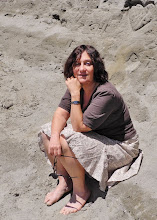
My memoir "Frantic" seems to have resonated with an astonishingly gifted eighteen-year-old violinist from the Iberian Peninsula. He reached out to me with these words: Having come across your memoir and being currently in the process of reading it, I found my heart sinking at numerous passages, both the ones whose situations I could relate to and the ones I never came close to experiencing.
My new reader, from the age of four, has been molded into an accomplished violinist having made his debut at the age of eight, and now, is a full-fledged artist; I listened with admiration to a recording of the Tchaikovsky Concerto he sent this way. This young man became a violinist, in part, to please parents and esteemed, highly sought-after mentors for he is bestowed with natural abilities. But like most teenagers, he is now conflicted by the toll and demands the art form snatches from his youth. I find myself reading his words as if from a page of poetry. My spirit connects with his as he unburdens his heart:
My violin teacher asked me what my free time was like, and it was then that my blood completely froze. I loved music, but music is about life; in Zigeunerweisen are the bonfires of the Gypsies, in Beethoven's Spring Sonata the Viennese gardens. I couldn't give up on life—i.e., my precious free time—for the sake of those dreaded scales and exercises! It would be like tearing down a house, regardless of its cracks and paint smears, in order to labor tirelessly and put up the flawless painting of a house in its place. What for? I could certainly not live there.
And a bit later, a probing assessment:
I've met more stressed than happy musicians. I've met the accompanists with fully booked schedules and piles of sheet music to learn, the orchestra musicians with long rehearsals and back pain, and many of those people who studied hard in the most prestigious schools. What for? The fact that music, a food of the soul rather than a cold austere exact science, must be worked for the same way (or maybe more so) as accounting or engineering is a disheartening concept to grasp, one which may often miss the perception of general audiences, but which I, as a supposedly aspiring musician, can't hope to neglect if I really am serious about what lays ahead of me. And why I ought to be serious is the question that plagues my mind daily.
Since my memoir "Frantic" concludes at about the age of this reader, he asks that I expand upon the experience of studying with Jascha Heifetz, and what my present perspective is regarding the classical music profession. I will happily oblige for all readers out there, young and old.
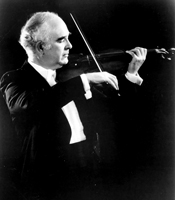
In the final chapter of "Frantic" Jascha Heifetz enters the class nonchalantly and remarks off-handedly that all human beings are members of the animal kingdom. I believe Heifetz was attempting to set the record straight; to level the playing field; in class, we were all to be equals, including our mentor, the legendary Jascha Heifetz himself. But then, with a light touch of humor, he directed the class to acknowledge that unlike animals, or the herd, we were each responsible for our own actions. With Heifetz, every single facet of his life appeared to be a conscious act of will and self-determination. Though he may have felt nervous prior to performances, he imparted this message to students: If I do not display confidence in my work, who will have confidence in me? Before launching into a scale, he'd warn: Don't be afraid of the scale; make the scale afraid of you! He seemed convinced by the power of mind over matter as a means to prevail over impulse; he recognized the force of opposites; the triumph of the spirit. Heifetz was not to be duped. I was dismissed from the class, along with several other members at the end of the year, in part because (as my young reader might best comprehend), Jascha Heifetz felt that I was conflicted about becoming a violinist in the first place. That ambivalence manifested itself in my temerity during class. The choice of becoming a violinist had not been mine, he noted; I was the vessel for my mother's musical desires. Heifetz then advised me to depart from the class and sort things out for myself.
My young reader and I agree that to become a classical artist might be compared with the priesthood or ministry. It is fair to conceive of music as a calling. In a marvelous book about Yehudi Menuhin by his nephew, the Los Angeles writer Lionel Rolfe, entitled "The Menuhins: A Family Odyssey" it is revealed that Menuhin was a direct descendant of Russian rabbis who created the mystical sect of Judaism known as Hassidism. Rolfe describes his uncle as having been a kind of latter-day musical Baal Shem, the 18th century Russian Hasidic prophet. For Menuhin, playing the violin was a spiritual quest; his life was one of sacrifice devoted to the service of mankind through art. Practicing, like the call to prayer, was a pursuit leading to his own enlightenment and through performance, an offering of glory to the world.
We cannot all be like Heifetz or Menuhin, of course. In response to today's consumer driven, technological absorption, it might be wise for a talented young artist to think long and hard about the bumpy road that lies ahead for the future of the arts. I secretly wonder whether Heifetz or Menuhin would have succeeded as concert violinists in today's superficial, self-centered culture.
Showing posts with label Jascha Heifetz. Show all posts
Wednesday, March 9, 2011
Friday, June 11, 2010
Rx for Violinists
With summer approaching, and as I reflect back on experiences in my youth, I remember how much of a challenge it was to adapt to the different styles and rigor of learning. As I explained to a lovely adult student last evening, who is making astonishing progress due to her quick analytical skills, there is not one single method, or cure-all that works for everyone, especially when it comes to playing the violin. The best training I received, over the course of my extensive years of study, was the encouragement to make discoveries and experiment on my own.
I recall my first summer at Meadowmount School of Music, "a boot camp for budding virtuosos" and admit that at the age of eleven, I didn't have the slightest clue how to practice. On my music stand was the thick book of Kreutzer Etudes, a crucial but rather dry book. Years later, during studies in the Heifetz Masterclass, the Kreutzer book would be used as a Physician's Desk Reference. For bow tremor, etude number one might be helpful, but in small dosages. A string crossing disturbance could be aided by number thirteen. Shifting ailments were treated by a strong dose of eleven and twelve. If the fourth finger experienced fatigue or weakness during trills, the eighteenth etude, practiced at regular intervals, would boost endurance and agility. And so on.
Recently, I have been introduced to another excellent resource for the intermediate to advanced learner. It is 12 Etude-Caprices in the Styles of the Great Composers by Meadowmount violinist and faculty member, Amy Barlowe. What I enjoy most about this collection, is that it reinforces practice tools for helping students learn and discover on their own. It is a wonderful complement to the Kreutzer because it doesn't taste like medicine but offers strong efficacy. Each etude-caprice livens the imagination with a focus on the stylistic differences between great composers, such as Sturm and Drang influence in Beethoven, changing meters in Ravel, and characteristics of Slovak folk music in Bartok. Ms. Barlowe includes concise measure for measure technical and musical practice guides, including improving intonation through the "stop bow" method and double-stop strategies.
There are wonderful illustrations and biographies about each composer, as well as chronological correlations with artists, writers, and historic events which encourages the student to contextualize musical styles. Most important, 12 Etude-Caprices in the Styles of the Great Composers is a curative for anyone who needs guidance during practice. I hope Ms. Barlowe might consider adding a piano accompaniment, or optional second violin, so that these etude-caprices can be included in the recital literature.
I recall my first summer at Meadowmount School of Music, "a boot camp for budding virtuosos" and admit that at the age of eleven, I didn't have the slightest clue how to practice. On my music stand was the thick book of Kreutzer Etudes, a crucial but rather dry book. Years later, during studies in the Heifetz Masterclass, the Kreutzer book would be used as a Physician's Desk Reference. For bow tremor, etude number one might be helpful, but in small dosages. A string crossing disturbance could be aided by number thirteen. Shifting ailments were treated by a strong dose of eleven and twelve. If the fourth finger experienced fatigue or weakness during trills, the eighteenth etude, practiced at regular intervals, would boost endurance and agility. And so on.
Recently, I have been introduced to another excellent resource for the intermediate to advanced learner. It is 12 Etude-Caprices in the Styles of the Great Composers by Meadowmount violinist and faculty member, Amy Barlowe. What I enjoy most about this collection, is that it reinforces practice tools for helping students learn and discover on their own. It is a wonderful complement to the Kreutzer because it doesn't taste like medicine but offers strong efficacy. Each etude-caprice livens the imagination with a focus on the stylistic differences between great composers, such as Sturm and Drang influence in Beethoven, changing meters in Ravel, and characteristics of Slovak folk music in Bartok. Ms. Barlowe includes concise measure for measure technical and musical practice guides, including improving intonation through the "stop bow" method and double-stop strategies.
There are wonderful illustrations and biographies about each composer, as well as chronological correlations with artists, writers, and historic events which encourages the student to contextualize musical styles. Most important, 12 Etude-Caprices in the Styles of the Great Composers is a curative for anyone who needs guidance during practice. I hope Ms. Barlowe might consider adding a piano accompaniment, or optional second violin, so that these etude-caprices can be included in the recital literature.
Wednesday, March 24, 2010
Shakers
This video showing Minneapolis Symphony concertmaster, Roger Frisch, undergoing brain surgery to relieve him of bow shake seems like an act of desperation, and rather ghoulish to me. I agree with Mr. Frisch that a loss of bow control is the kiss of death for a violinist. By now, it's no secret that most professionals and conservatory students regularly rely on low dose beta-blockers, and sometimes alcohol or benzodiazepines, to prevent adrenaline from wreaking havoc on a performance. I feel empathy for Mr. Frisch. We've all been there—not on the operating table perhaps, but faced with a loss of control during a sudden, intense rush of adrenaline. This condition, I might add, can strike at any magic moment.
I remember in my youth watching a scary performance of Yehudi Menuhin struggle through the Beethoven Concerto. He suffered anguish during the long sustained held notes which turned into flying staccato. I was so impressionable as a youngster that the effect of watching a great artist battle bow shake replicated itself in my own performances, a week or so later, and stuck for some time. These were the days before Propranolol, commonly known as Inderal. At some point, during the mid 1970's, I became a student of Erick Friedman at the Manhattan School of Music. I never thought he had been tormented by stage fright and bow shake, as he reminded me of a prize fighter, but sure enough, Friedman was all too eager to talk about his own survival. It boiled down to this: As a youngster, Friedman played with so much underlying tension and fear that he suffered "psychosomatic asthma" before each performance. There were times when he fought to catch his breath, and wound up in the hospital rather than onstage. It wasn't until Friedman closely studied with both Nathan Milstein and Jascha Heifetz, that he began to re-engineer his own playing, with a keen eye toward what he called, "conscious relaxation". How Friedman managed this, I still do not comprehend, but the crucial factor is that he himself believed in his methodology, enough to face down cameras during the famous Heifetz Masterclass Series on television. Erick Friedman was a marshmallow on the inside, but gave an appearance of outward unflappability.
As I teach students with the goal of successful future performances, I have come to rely on wisdom from psychiatrist, logo-therapist and concentration camp survivor Viktor E. Frankl. In his important book, "The Will To Meaning", Frankl devotes numerous pages to the topic of hyper-reflection and the confrontation of fear. In a sense, this is the crux of what performers go through during an anxiety attack; hyper-reflection means excessive attention. A performer undergoes a case of nervousness, for no obvious reason, and then becomes fearful of the event reoccurring. This presents an "anticipatory anxiety" which turns into a conditioned response, and continues indefinitely, growing into a performer's worst nightmare. In "The Will to Meaning", Frankl gives his patients permission to do the very things they actually fear, and perform them with abandon. The practice is known as paradoxical intention:
"We know a case in which a violinist always tried to play as consciously as possible. From putting his violin in place on his shoulder to the most trifling detail, he wanted to do everything consciously, to perform in full self-reflection. This led to a complete artistic breakdown...Treatment had to give back to the patient his trust in the unconscious, by having him realize how much more his unconscious was than his conscious."
Of course, I have come to believe in the power of suggestion. I think a person is capable of being transformed by healing words. At one point, I recall Erick Friedman offering his blessings for me to take a risk and "mess up". And here, I must include Friedman's words which I've never forgotten: If you played the notes upside down or backwards, you'd still sound like an angel to me.
Many parents have solicited advice on how to minimize the nasty effects of stage fright for their youngsters. Here are a few suggestions, although this is not a one size fits all approach: Make sure that your child is given permission to make blunders or mistakes, and that he/she will not be measured by any performance or compared to others. Please let teachers know that to push a bit is acceptable, but to assign works which are beyond the student's capabilities have the potential to turn disastrous. Accept challenges in small steps. Have your child perform for family, friends, teddy bears, cats and dogs. If those performances go well, great, take the next little step. It's normal for children who have previously been unaware of the public to become self-conscious during adolescence. Lastly, not every talented individual is destined to be onstage, or viewed under the lens of a microscope.
I remember in my youth watching a scary performance of Yehudi Menuhin struggle through the Beethoven Concerto. He suffered anguish during the long sustained held notes which turned into flying staccato. I was so impressionable as a youngster that the effect of watching a great artist battle bow shake replicated itself in my own performances, a week or so later, and stuck for some time. These were the days before Propranolol, commonly known as Inderal. At some point, during the mid 1970's, I became a student of Erick Friedman at the Manhattan School of Music. I never thought he had been tormented by stage fright and bow shake, as he reminded me of a prize fighter, but sure enough, Friedman was all too eager to talk about his own survival. It boiled down to this: As a youngster, Friedman played with so much underlying tension and fear that he suffered "psychosomatic asthma" before each performance. There were times when he fought to catch his breath, and wound up in the hospital rather than onstage. It wasn't until Friedman closely studied with both Nathan Milstein and Jascha Heifetz, that he began to re-engineer his own playing, with a keen eye toward what he called, "conscious relaxation". How Friedman managed this, I still do not comprehend, but the crucial factor is that he himself believed in his methodology, enough to face down cameras during the famous Heifetz Masterclass Series on television. Erick Friedman was a marshmallow on the inside, but gave an appearance of outward unflappability.
As I teach students with the goal of successful future performances, I have come to rely on wisdom from psychiatrist, logo-therapist and concentration camp survivor Viktor E. Frankl. In his important book, "The Will To Meaning", Frankl devotes numerous pages to the topic of hyper-reflection and the confrontation of fear. In a sense, this is the crux of what performers go through during an anxiety attack; hyper-reflection means excessive attention. A performer undergoes a case of nervousness, for no obvious reason, and then becomes fearful of the event reoccurring. This presents an "anticipatory anxiety" which turns into a conditioned response, and continues indefinitely, growing into a performer's worst nightmare. In "The Will to Meaning", Frankl gives his patients permission to do the very things they actually fear, and perform them with abandon. The practice is known as paradoxical intention:
"We know a case in which a violinist always tried to play as consciously as possible. From putting his violin in place on his shoulder to the most trifling detail, he wanted to do everything consciously, to perform in full self-reflection. This led to a complete artistic breakdown...Treatment had to give back to the patient his trust in the unconscious, by having him realize how much more his unconscious was than his conscious."
Of course, I have come to believe in the power of suggestion. I think a person is capable of being transformed by healing words. At one point, I recall Erick Friedman offering his blessings for me to take a risk and "mess up". And here, I must include Friedman's words which I've never forgotten: If you played the notes upside down or backwards, you'd still sound like an angel to me.
Many parents have solicited advice on how to minimize the nasty effects of stage fright for their youngsters. Here are a few suggestions, although this is not a one size fits all approach: Make sure that your child is given permission to make blunders or mistakes, and that he/she will not be measured by any performance or compared to others. Please let teachers know that to push a bit is acceptable, but to assign works which are beyond the student's capabilities have the potential to turn disastrous. Accept challenges in small steps. Have your child perform for family, friends, teddy bears, cats and dogs. If those performances go well, great, take the next little step. It's normal for children who have previously been unaware of the public to become self-conscious during adolescence. Lastly, not every talented individual is destined to be onstage, or viewed under the lens of a microscope.
Tuesday, February 23, 2010
Awakening
One of the inevitable tasks of being a teacher is that ultimately, we must let go. At the conclusion of this school year, I will be saying farewell to a few seniors, after many years of collaboration. Hopefully, my students will have learned as much from me as I have learned from them. It is not only violin technique and musicianship that I explore with my students. Our collaboration goes much deeper than that, perhaps into the realm of personal transformation. Many parents and colleagues have expressed a reverence for their instrumental teachers that transcends any other educational experience. An accomplished cellist friend of mine, Michael Zachary, who happens also to be an attorney and plays with Rainier Symphony, has shared that the wisdom transmitted from his former cello teacher remains unparalleled to this day.
Occasionally, the time with a student is cut too short, perhaps due to a family's need to relocate for employment purposes. Such is the case for me with one immensely talented student, a twelve-year-old whose artistry, I'm convinced, is genetically encoded from ancestral roots in Odessa, Ukraine, a part of the world that produced some of the greatest writers, poets, actors and musicians.
On top of my messy desk, next to my laptop, rests the "Collected Stories" of Isaak Babel (1894-1941). I have read one of the stories, "Awakening" several times, for the theme of a parent imposing his fantasies on a child strikes an all-too-familiar chord with me. Babel, himself having studied the violin in his youth while growing up in Odessa, tells the tale of a young violinist forced by his father to study with the fictional Professor Zagursky (most likely modeled after the famous pedagogue Piotr Stolyarsky who taught Nathan Milstein, David Oistrakh, and Leonid Kogan, among others). The young Jewish protagonist, though lacking in musical talent, is to be deemed a wunderkind like Mischa Elman, Efrem Zimbalist and Jascha Heifetz, in order to lift the family from dire poverty. The push from his father and fame frenzied teacher to succeed backfires, however, and eventually the young violinist casts his violin into the sea. But all is not lost as our protagonist awakens to a love for literature and becomes, eventually, a writer acquiring fame on his own terms.
"When a boy was four or five, his mother took the tiny, puny creature to Mr. Zagursky. Zagursky ran a Wunderkind factory, a factory of Jewish dwarfs in lace collars and patent-leather shoes---Zagursky gave them a first push in the right direction, and then the children were sent to Professor Auer in St. Petersburg."
I find Babel's tale holds much relevance for me as I continue to work with young students and counsel their parents. The ways of learning are manifold, and as I, too, have sort of awakened, I feel as if I have tapped into an ability to problem solve. As I teach, I'm guided by an instinct, or intuition, a sort of psychic connection rather than an exact method. I check for signs from my young students that their music is inspired by a desire to express themselves, a respect for artistry, and that it is based on their own dreams, not just those of their parents. And with the time that we will have shared together, my task as a teacher will be accomplished.
Occasionally, the time with a student is cut too short, perhaps due to a family's need to relocate for employment purposes. Such is the case for me with one immensely talented student, a twelve-year-old whose artistry, I'm convinced, is genetically encoded from ancestral roots in Odessa, Ukraine, a part of the world that produced some of the greatest writers, poets, actors and musicians.
"When a boy was four or five, his mother took the tiny, puny creature to Mr. Zagursky. Zagursky ran a Wunderkind factory, a factory of Jewish dwarfs in lace collars and patent-leather shoes---Zagursky gave them a first push in the right direction, and then the children were sent to Professor Auer in St. Petersburg."
I find Babel's tale holds much relevance for me as I continue to work with young students and counsel their parents. The ways of learning are manifold, and as I, too, have sort of awakened, I feel as if I have tapped into an ability to problem solve. As I teach, I'm guided by an instinct, or intuition, a sort of psychic connection rather than an exact method. I check for signs from my young students that their music is inspired by a desire to express themselves, a respect for artistry, and that it is based on their own dreams, not just those of their parents. And with the time that we will have shared together, my task as a teacher will be accomplished.
Labels:
Isaak Babel,
Jascha Heifetz,
Rainier Symphony
Wednesday, October 28, 2009
Tosca for Today
Any conscientious string player strives for a bel canto style and the naturalness of phrase that characterizes great singing. The Heifetz protege and my beloved violin teacher, Erick Friedman, would encourage all his students to learn from singers and pianists for secrets of interpretation. My personal exposure to singing has essentially been while playing in the pit as an orchestra player. Sadly, one of my most vivid recollections, before I was blacklisted from the local opera orchestra, was performing "Carmen" and being forced to endure, as a stand partner, a violinist with loose lips who pointed to the stage during lengthy bars of rest and laughed. "How could anyone be seduced by that fatso? That's Carmen? I can feel the stage shake with every step she takes—"

To replace those regrettable memories, and enrich my life with a meaningful operatic experience, I now attend Metropolitan Opera at the movies. Peter Gelb, general manager of the Met, has been criticized for pandering to audiences but I detect the genetic genius of a Heifetz. "Classical music used to be pop music," says Gelb, and indeed, his maternal great-uncle Jascha Heifetz composed light, popular songs under the pen-name Jim Hoyle, as in one such song: When you make love to me, don't make me believe. During the Great Depression and war years, Gelb's great-uncle Heifetz composed numerous contemporary tunes in keeping with the times. Gelb states that his commitment to the art form is to revitalize opera and make it accessible to the general public; I have no doubt that he's on the right path. I'll bet other opera company general directors are kicking themselves. But then, even if others chose to offer live simulcasts on the big screen, how many companies could compete with the Met?
In the recent production of Puccini's "Tosca", Gelb boldly replaces the definitive Franco Zeffirelli production with a lean version by Swiss director Luc Bondy. Although this interpretation of "Tosca" got a thumbs down from those resistant to change after 25 years of Zefirelli, Bondy makes an honest attempt to emphasize the "true essence of character" through the device of theatrical realism. In the words of Gelb, Bondy's Tosca demonstrates that "our art is not locked in the past."
Puccini's tragic heroine was played by the tremendously beautiful Finnish soprano Karita Mattila. She has been one of the most prominent singers at the Met for more than a decade. Baritone George Gagnidze made his second Met appearance, this time as the evil police chief Scarpia. With Gagnidze's splendid intensity and depth of voice, he suits the part of the despised Scarpia to perfection. In the "Te Deum" scene, I was spell-bound by Scarpia's eyes, crazed and wild; he reminded me of a raving music director from my past; close up at the theater, one can even spot drool on Scarpia's lips as he lusts after Tosca. The role of Tosca's doomed lover, Cavaradossi, was superbly sung by the passionate Marcelo Alvarez, a self-proclaimed Romantic. He has been hailed as a Puccini tenor by The New York Times.
The orchestra, under the direction of Joseph Colaneri, played so rapturously throughout the production that during magic moments, all I needed to do was close my eyes and enjoy.

To replace those regrettable memories, and enrich my life with a meaningful operatic experience, I now attend Metropolitan Opera at the movies. Peter Gelb, general manager of the Met, has been criticized for pandering to audiences but I detect the genetic genius of a Heifetz. "Classical music used to be pop music," says Gelb, and indeed, his maternal great-uncle Jascha Heifetz composed light, popular songs under the pen-name Jim Hoyle, as in one such song: When you make love to me, don't make me believe. During the Great Depression and war years, Gelb's great-uncle Heifetz composed numerous contemporary tunes in keeping with the times. Gelb states that his commitment to the art form is to revitalize opera and make it accessible to the general public; I have no doubt that he's on the right path. I'll bet other opera company general directors are kicking themselves. But then, even if others chose to offer live simulcasts on the big screen, how many companies could compete with the Met?In the recent production of Puccini's "Tosca", Gelb boldly replaces the definitive Franco Zeffirelli production with a lean version by Swiss director Luc Bondy. Although this interpretation of "Tosca" got a thumbs down from those resistant to change after 25 years of Zefirelli, Bondy makes an honest attempt to emphasize the "true essence of character" through the device of theatrical realism. In the words of Gelb, Bondy's Tosca demonstrates that "our art is not locked in the past."
Puccini's tragic heroine was played by the tremendously beautiful Finnish soprano Karita Mattila. She has been one of the most prominent singers at the Met for more than a decade. Baritone George Gagnidze made his second Met appearance, this time as the evil police chief Scarpia. With Gagnidze's splendid intensity and depth of voice, he suits the part of the despised Scarpia to perfection. In the "Te Deum" scene, I was spell-bound by Scarpia's eyes, crazed and wild; he reminded me of a raving music director from my past; close up at the theater, one can even spot drool on Scarpia's lips as he lusts after Tosca. The role of Tosca's doomed lover, Cavaradossi, was superbly sung by the passionate Marcelo Alvarez, a self-proclaimed Romantic. He has been hailed as a Puccini tenor by The New York Times.The orchestra, under the direction of Joseph Colaneri, played so rapturously throughout the production that during magic moments, all I needed to do was close my eyes and enjoy.
In pictures: Heifetz, Gelb, Tosca's original poster
Labels:
Erick Friedman,
Jascha Heifetz,
Peter Gelb
Sunday, September 6, 2009
Teacher Shopping
The end of summer usually brings a round of prospective violin students eager to make a switch to a new teacher. Sometimes a youngster enters the studio, violin case in hand, without any music or material, expecting me to provide an instant curriculum. A parent usually follows into the room displaying an expression which reads: Are you, perhaps, the one teacher to be entrusted to transform my wunderkind into the next Joshua Bell or Hilary Hahn?
And each potential student that I encounter, with anxious parents in tow, takes me back to my own young years. At the age of fourteen, my mother determined, as she did with anything related to musical education, that it was time to "move on". Qualified applicants for the task of guiding my violin lessons were scrutinized, with a final toss up going to Jascha Heifetz, Joseph Silverstein, and Dorothy DeLay. As it happened, Mr. Heifetz taught at USC in Los Angeles, so studies with him would have required an entire family relocation. Lessons with Ms. DeLay at Juilliard would have meant a continuation of the weekly Greyhound bus commutes from Boston to New York during the night. But Mr. Silverstein, then concertmaster of Boston Symphony, was in my backyard, so to speak. His regular appearances on WGBH television with BSO made him, in my eyes, an icon. To this day, I have a splendid memory of listening to an entire recital of his at the Isabella Stewart Gardner Museum in Boston. As he performed the Adagio from Sonata in G Minor of J.S.Bach, I sat mesmerized by the choreography of his bushy eyebrows raising in tandem with the violin bow. So it was with great anticipation that I auditioned for Mr. Silverstein, back in 1973, at his studio in the Berkshires. I presented for him the very same Bach solo sonata movement as he had played at the Gardner Museum. My mother waited outside the studio for Mr. Silverstein's verdict. My father, who drove us everywhere in a pea-green Oldsmobile, and detested driving, went for a sanity walk to smoke a pack of cigarettes.
After the generous hour spent with Mr. Silverstein, a lesson which included valuable insight about bow technique and relaxation, he exchanged a few words with my mother. I believe Mr. Silverstein's message was that to choose to play in a professional orchestra on a par with Boston Symphony in later years, would be an ideal profession for a young woman, especially if that woman had expectations of balancing a family life with a career.
And that was Joseph Silverstein's fatal flaw with Frances Kransberg. Because, you see, my mother's daughter was not to become just an "orchestral" player, but something, in her mind, much more.
After the generous hour spent with Mr. Silverstein, a lesson which included valuable insight about bow technique and relaxation, he exchanged a few words with my mother. I believe Mr. Silverstein's message was that to choose to play in a professional orchestra on a par with Boston Symphony in later years, would be an ideal profession for a young woman, especially if that woman had expectations of balancing a family life with a career.
And that was Joseph Silverstein's fatal flaw with Frances Kransberg. Because, you see, my mother's daughter was not to become just an "orchestral" player, but something, in her mind, much more.
photo of Joseph Silverstein
Friday, October 24, 2008
Hocus Pocus With A Focus
This post is for my open-minded, younger readers, in the spirit of Halloween.
One of the most daunting tasks for many young artists is the memorization of solo pieces, J.S. Bach in particular. Fear plays a large factor. Many times an artist psyches herself into believing she'll fail at memorization. In an East Coast music festival during my student years, I played the Chaconne from Partita in D Minor in recital. My mantra was: I'll forget the notes, I'll forget the notes. And of course, I forgot the notes. A huge chunk of the arpeggiated middle section vanished, transforming my rendition into a condensed version. I clocked about seven minutes rather than thirteen. To my great fortune, harpsichordist and Baroque specialist Kenneth Cooper, sat in the audience. Later, Cooper suggested I practice Bach in a totally different manner. "Switch off the lights in the practice room," he said,"play by candlelight. Transform the setting, step back in time, and open yourself to the Spirit." Is it any wonder Kenneth Cooper is renowned for his improvisations and extraordinary authenticity in ornamentation? There is no match for a vivid imagination and sense of curiosity. And to me nowadays, there is no greater pleasure than stealing off in a corner to practice Bach. Fantasy rather than fear.
As artists, we are entitled to escape from the mundane existence of ordinary life. My former teacher, Erick Friedman, maintained that he spoke with his dead mother as he played the slow movement from a Mozart Concerto in Tacoma. Friedman's sense of grief diminished following the performance. A musician's trance is often compared to prayer, the mood altering benefits, similar. The trance-like state is one aspect of performing I never want to relinquish. Perhaps I'm an escape artist at heart.
It's not unusual for people like ourselves to possess a heightened sense of awareness. Ayke Agus, the longtime assistant and accompanist for Jascha Heifetz and ultimately his confidante, reported in her book "Heifetz As I Knew Him" of having this dream: I saw Heifetz in a beautiful blue suit, standing afar; I was sitting in the same room with him, dressed in a long gown and looking at him. He came closer and closer, and when he got to me he gave me a big hug and said,"I will be gone for a while, but I'll return to get you. Wait for me." I could still feel the warmth of his hug when the telephone rang. His private night nurse called me before she called anyone else, with the news that Jascha Heifetz had passed away."
One of the most fascinating psychic stories was the life of Rosemary Brown, a spiritualist who claimed dead composers, most notably Franz Liszt, dictated new works for her to share with the world. Brown insisted that each composer had his own way of dictating to her. Liszt controlled her hands at the keyboard, Schubert sang to her, and Chopin pushed her fingers onto the keys. Mrs. Brown maintained that she had never had musical training except for a few years of piano lessons, yet she produced music and works of art that stumped the experts.
Lucky are those who can transcend the physical world, commune with dead souls, and focus on a moment of bliss.
One of the most daunting tasks for many young artists is the memorization of solo pieces, J.S. Bach in particular. Fear plays a large factor. Many times an artist psyches herself into believing she'll fail at memorization. In an East Coast music festival during my student years, I played the Chaconne from Partita in D Minor in recital. My mantra was: I'll forget the notes, I'll forget the notes. And of course, I forgot the notes. A huge chunk of the arpeggiated middle section vanished, transforming my rendition into a condensed version. I clocked about seven minutes rather than thirteen. To my great fortune, harpsichordist and Baroque specialist Kenneth Cooper, sat in the audience. Later, Cooper suggested I practice Bach in a totally different manner. "Switch off the lights in the practice room," he said,"play by candlelight. Transform the setting, step back in time, and open yourself to the Spirit." Is it any wonder Kenneth Cooper is renowned for his improvisations and extraordinary authenticity in ornamentation? There is no match for a vivid imagination and sense of curiosity. And to me nowadays, there is no greater pleasure than stealing off in a corner to practice Bach. Fantasy rather than fear.
As artists, we are entitled to escape from the mundane existence of ordinary life. My former teacher, Erick Friedman, maintained that he spoke with his dead mother as he played the slow movement from a Mozart Concerto in Tacoma. Friedman's sense of grief diminished following the performance. A musician's trance is often compared to prayer, the mood altering benefits, similar. The trance-like state is one aspect of performing I never want to relinquish. Perhaps I'm an escape artist at heart.
It's not unusual for people like ourselves to possess a heightened sense of awareness. Ayke Agus, the longtime assistant and accompanist for Jascha Heifetz and ultimately his confidante, reported in her book "Heifetz As I Knew Him" of having this dream: I saw Heifetz in a beautiful blue suit, standing afar; I was sitting in the same room with him, dressed in a long gown and looking at him. He came closer and closer, and when he got to me he gave me a big hug and said,"I will be gone for a while, but I'll return to get you. Wait for me." I could still feel the warmth of his hug when the telephone rang. His private night nurse called me before she called anyone else, with the news that Jascha Heifetz had passed away."
One of the most fascinating psychic stories was the life of Rosemary Brown, a spiritualist who claimed dead composers, most notably Franz Liszt, dictated new works for her to share with the world. Brown insisted that each composer had his own way of dictating to her. Liszt controlled her hands at the keyboard, Schubert sang to her, and Chopin pushed her fingers onto the keys. Mrs. Brown maintained that she had never had musical training except for a few years of piano lessons, yet she produced music and works of art that stumped the experts.Lucky are those who can transcend the physical world, commune with dead souls, and focus on a moment of bliss.
The Ghost Pianist by Morgana88
Labels:
Erick Friedman,
Jascha Heifetz,
Kenneth Cooper
Subscribe to:
Posts (Atom)