Tuesday, December 30, 2008

Taming of the Shrew

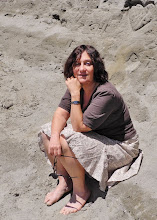
Just in time for the new year ahead; I've been tamed. And here I am with my much, much better half. I can't compete with this man's intellect, wry humor, or sense of rubato, but I've been told we make a good pair, and that's a good thing, especially after a marriage of 25 years. Even our own children, Anna and Sarah, still like us!

As the year 2009 comes knocking at my door, I'd like to list a few of my favorite magic moments from this past wondrous year.

I'll begin with the most recent experience, which was a sensational book club meeting at our dear friends, the Roshals, as we dissected Vladimir Nabokov's Pale Fire. I traveled all the way to Zembla with my daughter Anna to buy just the right Onhava pickles, placed them in a jar, and shook them onto a plate. Those Zemblans! They know their pickles! Oh, how I love Zembla and Nabokov! Pravda Vodka went down smooth and warm; I could feel my capillaries open. A hard potato bread and peppery cheese plus Russian Tea and blacker than black coffee made all six senses come alive. Anna and I left the book club still fascinated by Zembla, and Charles X Kinbote, the supreme delusional narrator and voyeur. Kinbote reminds me of someone...(a secret, I mustn't tell).

So, dear readers. Here are a few more of my favorite 2008 magic moments: At St. James Cathedral, I felt close to tears during the performance of Mozart's Requiem under the inspiring leadership of Dr. James Savage. Each note and phrase of the Requiem was played and sung with tenderness, reverence and compassion. As I write about this St. James experience, I recall Lisa Cardwell Pontén's magnificent soprano solos illuminating my heart and soul; her voice soared with Mozartean beauty. I also sensed an all-embracing love emanating from the choir, orchestra and congregation as tenor Howard Fankhauser slowly lifted his head to sing, his eyes moist with grief from the sudden loss of his young son, Colin; Howard's performance was a triumph of the spirit; I felt Howard sang for his child. In moments such as these, I feel blessed to be a musician.

I've adored combining goals with that renegade Finn Ilkka Talvi. I admire his multi-faceted talents, and if we weren't married, I might be jealous. Together, we've watched our dedicated violin and viola students aspire to new challenges. We've shared well-guarded secrets of interpretative style and technique with our pupils, passed down from the Great Masters, such as Heifetz, Galamian, Odnoposoff, Temianka, Granroth, Bouillon, and Nadien. Our musical backgrounds are similar, yet different, which makes it all the more intriguing.

We performed a duo concert together at Western Washington University through a generous invitation from Professor Walter Schwede last October. Ilkka and I met the excellent pianist Dainius Vaicekonis during our collaboration at WWU and offered works by Khatchaturian, Ravel and Sarasate. Ilkka will feature many of these compositions during his return engagement to Pori, Finland, after an absence of many years, while also leading master classes.

Life is gathering momentum for our family. My absolute hands-down favorite magic moment came as a welcome surprise during the recent blizzard that swept Seattle. I played Principal Viola for Emerald Ballet Theatre for their production of The Nutcracker under Artistic Director Viktoria Titova and Musical Director David Waltman, and you know what? I never knew the Nutcracker could be so charming! The EBT production lifted my spirits high enough that I'll never want to say good-bye. Not a single show was canceled due to snow. And I'm eager for next year's run.

I wonder how and if they say "Live Long and Prosper" in Zemblan. Vladimir, can you help me?
Photo by Anna Talvi

Thursday, December 25, 2008

Shalom

Twas the day before Christmas, with my family snug at home, when I looked from a bin of potatoes and onions at Metropolitan Market, and thought about Shalom. But glancing up from the bin, here's what I saw: Two ghosts—a married couple—from my Christmases past. Sure enough, the husband had observed me, and then quickly spun round, appearing to float from aisle unbound. A ridiculous hide-and-seek proceeded to begin. The ghost from Christmases Past presided over the cheese, while I whizzed with my cart in tow down cereal and grain. As I made my way (with heart pounding through my chest) towards olives and cheese, the apparition wafted down Spice Lane, nose in the air. His pale, garrulous wife seemed to hover near the fruits. I left the market with only a breast of turkey (free range, I'll have you know), a few potatoes, and a heavy heart. The snow covered hills and winding streets offered me an opportunity to reflect on life, and I trampled home, recalling books and perspectives which have become my own.

Daniel Barenboim emphasizes in his latest book, "Music Quickens Time" the difference between power and force. It is an illuminating topic, as the two entities are often confused in politics, music, and everyday life. Barenboim makes this point: The idea of music, as we see, could be a model for society; it teaches us the importance of the interconnection between transparency, power and force. During my formative years as an orchestra musician, I felt most respondent (as opposed to despondent), in the presence of inspirational and thoughtful leaders. There were so few in my life that I can count them on, perhaps, one hand. Orchestra musicians tend to revere leaders on the podium as parishioners do their priests, congregants to clergy. We seek guidance and encouragement from our music directors especially, for they have the potential to become role models, allowing us to transcend our own limitations. That is partly why Barenboim, a defiant individual, tower of power, symbol of acceptance and integration of humanity, is unique in my eyes. A feeling of communion is also the force that compels me to play with Rainier Symphony— the music director, David Waltman, an innovator and motivator.

I have mentioned in several previous entries of this journal, my indebtedness to Ralf Gothoni as a source of personal enlightenment for my own artistic achievement. As a Christmas gift to my readers, I'm including the CNN link to Ralf and Elina's recent performance for Nobel Peace Prize recipient, former Finnish leader, Martti Ahtisaari.

Shalom.

Thursday, December 18, 2008

A Few Of My Favorite Things

This morning I was awakened from a blissful encounter with my dead sister Karen, to a clap and roar of thunder. I bolted upright, stared out the window. My eyes rested on my favorite thing: a thick blanket of snow. Even Seymour, our one-eyed, black cat who sometimes behaves more like a terrier, pounced on our bed, as if to announce the wintry delight.

Play day!

Bundled in layers, and dragging an old, rusty sled, my daughter Sarah and I whizzed down a steep hill at Rodgers Park, and then trudged to the top of Queen Anne. I was reminded of years ago, sledding down the counterbalance and slipping into a pit-iful Nutcracker.

By the time Sarah and I returned home, shaking snow off our boots and warming ourselves, we felt grateful for our creature comforts. My eldest daughter Anna might poke fun at my cooking, but sure enough, a batch of bean soup simmered, a pot of coffee brewed, and just for me, a bottle of cheap red graced the table.

I curled up in bed and watched one of my favorite movies: English director Tony Palmer's "Testimony, the story of Shostakovich" a deeply, unsettling film based on Solomon Volkov's often disputed book. The film opens with the 1975 state funeral and Shostakovich's voice (Ben Kingsley): I am dead, how else should I be smiling?

Just when I thought life couldn't get any better or the day more perfect, David Waltman showed up, fearless in the face of hazardous driving conditions but having to hoof the last steep climb, with score, parts, and bowing ideas for an upcoming concert of Dvorak's Seventh. Well, at least it kept the two men busy. I remember when Ruth Galos, wife of the late concert violinist Andrew Galos, quipped: You know, if our husbands aren't busy, they're driving us crazy!

Friday, December 12, 2008

Blind (Recording) Date

This morning, Ilkka and I had the pleasure of recording a set of string quartets by Seattle composer, Doug Palmer. Although Mr. Palmer and I had not met in person, after perusing his blog over the course of many months, and exchanging brief emails, I felt a connection to this fellow artist whose contributions to Seattle's musical community appear to have been insufficiently recognized. It's no longer a secret to the international music world, that Seattle has a knack for bungling careers and mangling reputations. It wasn't lost on Mr. Palmer, a conscientious observer, that my family received antagonistic treatment from a hostile workplace and the media. I'll always appreciate his concern and support.

There's a saying I hold dear: Adversity introduced me to myself. Sometimes, it's not until almost every door closes, that we discover our true, innermost potential. I wish Mr. Palmer continued success with his writing. His three string quartets are accessible, original and varied in character; mellifluous melodies interlaced with utterances of despair. I'm pleased that Ilkka and I were enlisted to play, along with our marvelous colleagues cellist Walter Gray, violist Rachel Swerdlow, and pianist-vocalist-composer David Paul Mesler.
Seated from left: me, Ilkka, Walter, Rachel
Standing from left: David and Doug

Wednesday, December 10, 2008

Fantasia

There's nothing like a good fantasy. When I was a youngster, practicing sometimes up to six hours daily, I'd imagine myself on the greatest stages of the world. Without a vivid imagination, I doubt I'd have slogged away for so many hours in the practice room. My imagination took flight during any session with Music Minus One, as I visualized myself as soloist with the finest of the finest. Tap, tap, tap went the click track. And I played every concerto from Bach to Paganini. I guess I experienced a dynamic inner life as a youngster. Years later, the Finnish polymath, Ralf Gothoni, whispered to me that if you fulfill 25% of your dreams, you're considered lucky.

When I accepted the concertmaster position for Northwest Chamber Orchestra in 1984, after a thrilling escapade serving as first chair for the Los Angeles Philharmonic Institute under Michael Tilson Thomas and Leonard Bernstein, I envisioned part ownership in the NWCO, an orchestra bursting with potential, ready for the launch pad. A few of the players lacked adequate training and skill, but in general, the overall musicianship standard was respectable, due to the musicians' dedication. I felt pride as the appointed leader, and took my role seriously, substituting Vogue and Cosmopolitan Magazines for miniature orchestral scores during flights to and from Los Angeles, where Ilkka and I maintained part time residence. I fancied myself a Seattle version of the late Iona Brown, indomitable leader of St. Martin-In-The-Fields turned into a force-to-reckon with Music Director of Los Angeles Chamber Orchestra.

The NWCO was repeatedly in the throes of financial turmoil, but always some benefactor, in the last minute, out of mercy, prior to bankruptcy, would dig into his or her pockets, sometimes refinance a mortgage, and grant a merciful stay of execution. Once or twice, an antiquated audience member left this world—no fault of ours, and we'd find the NWCO named as beneficiary. In such magic moments, the orchestra heaved a collective sigh of relief. We carried on—business as usual—while fantasizing that NWCO was one of the jewels of Seattle's community; too precious to lose.

This might be the year of magical thinking for a number of musicians and arts organizations, but nothing beats a good fantasy. Some groups, such as this one, are on the brink of reality. I wonder what would have happened if the Northwest Chamber Orchestra had reorganized, cloaked itself in a new identity, and tossed the archaic bargaining agreement before calling it quits. The ensemble had, after all, many top-notch artists at the helm, including Sidney Harth, Ralf Gothoni and Joseph Silverstein.

Well, I can still dream, can't I? As long as my fantasy ensemble doesn't become the Belly Up Royal Philharmonic – BURP.
Illustration from Disney's Fantasia 2000

Wednesday, December 3, 2008

Death and Life

In Sidney Poitier's latest book, Life Beyond Measure, he offers wisdom and inspirational advice through letter writing to his just-born great-granddaughter, Ayele, realizing he'll probably be dead by the time she can fully grasp his reflections and meditations about life, for he's now in his eighties. I'm crazy about Poitier; I fell in love with the actor while watching the film "To Sir With Love" when I was eight years old. And I remember my parents shaking their heads over "Guess Who's Coming To Dinner," as the concept of inter-marriage between blacks and whites was a disgrace, or a shande, according to my Jewish family.

By the twenty-second letter in Poitier's book, he ponders:
Do our parents actually live on in us, or does just their memory? If so, is it more than memory? Is inside us the actual resting place of that elusive quality deemed their "soul," and thus is it passed on from generation to generation?

I've wondered the same mystery. Death snatched my mother, father, and two sisters within a couple of years. Where have my loved ones gone? My imagination plays tricks on me, or does it?

Sarah, my sixteen year old, awakened to a desire to play the viola, and also the violin, less than a year ago. Whenever Sarah plays, I hear my mother's musical voice, as if a direct link of interpretation and style exists between grandmother and granddaughter. The way Sarah's fingers wrap themselves around the fingerboard—my mother's hands. The determination and hint of softness in Sarah's eyes; my mother again. We play duets together, as my mother once played with me. Nature, the great Recycler.

My sisters, Judy and Karen, both of blessed memory, were endowed with the Kransberg ability to extract humor from almost any situation. Judy and Karen could make anyone see the light through laughter. My daughter Anna, I'm convinced, is a fusion of my sisters. Look what she did now. My Anna started her own blog. And guess what the topic is? Her parents! Gulp.
Photo of Sarah Talvi by Donglok Kim

Saturday, November 29, 2008

Time And Ebb


As demand for live, classical music performances ebb with the economy, the arts world teeters with an over supply of conservatory-trained professionals unable to find steady employment. I applaud the foresight and wisdom of journalist/oboist Blair Tindall, author of Mozart in the Jungle—Sex, Drugs and Classical Music. This book, particularly the final chapter, should be required reading for eager, young conservatory-bound musicians. Tindall writes: Outdated rhetoric charging that the arts are a "necessity" sounds hollow at a time when so many Americans are hungry, homeless, unemployed, and without decent health care. Ironically, some of them are performers and artists. Culture can improve the spirit in so many ways, but only for those who can afford the time and money to attend performances or become involved in making art themselves. How can families justify spending money on performance subscriptions during times of intense, economic hardship?

Like Tindall, I believe audiences need to ask their local symphony, opera and ballet companies during the next "emergency" fund drive, how much executives, conductors and soloists are earning. While administrators of shows and ballets scramble to cut costs, I admit the option of replacing live orchestra with recorded music, as Oregon Ballet is doing for a portion of this year's Nutcracker, is a practical step.

After serving for over twenty years as concertmaster for Pacific Northwest Ballet, I know how tempo-sensitive dancers and choreographers tend to be. And who can blame them? Taped or "canned" music makes sense for long-term sustainability and artistic dependability. I'm reminded of the New York performance PNB gave of Balanchine's Divertimento No. 15 at City Center in 1996. I remember the incident well, as I was brought along to tour with the company as concertmaster (back in those days, my services were highly valued). The hurried tempos of conductor Stewart Kershaw caused Co-Artistic Director Kent Stowell to bolt from his chair, run down the aisle in distress, and yell "It's too fast, Stewart." I don't think Stowell deserved blame for his outburst. Too fast or too slow tempos have the potential to derail a ballet performance. As far as I'm concerned, Stowell's actions might have been deemed pre-emptive, a way of sparing his dancers from impending disaster in the high profile scene of Manhattan.

With today's increasingly superb technology, live orchestras and undependable conductors are dispensable. If we think back to the onset of the Great Depression, "talkies" meant devastation to many musicians; playing for silent movies was a respectable livelihood. And many shows today have replaced orchestra musicians entirely with the synthesizer, a far more cost-effective and reliable option.

This Thanksgiving, I offer my gratitude for being blessed with a loving, supportive and intelligent family, and for being liberated from you-know-what. I look forward to creating new goals and fresh traditions. The Talvi ladies shown in this photo are not push-overs, that's for sure. Though often in the minority, we stand by our values.
from left: Anna, Sarah, Marjorie & Silja Talvi

Wednesday, November 19, 2008

Benefactors Great And Small

While reading this story from St. Louis Post, adding to the long-list of arts groups facing tough economy and potential extinction, a name sounded familiar: Kranzberg. My paternal family, the Kranzbergs, originated from the Volhyn region of Ukraine, where a village by the same name exists to this day. As was the custom for most 19th century Russian Jews, my ancestors adopted the name Kranzberg from the shtetl they inhabited. No matter the various spellings: Kransberg or Kranzberg, or for that matter, Kronsberg and Kronzberg; we're all blood relatives.

Legend has it, that two first cousin Kranzbergs settled in America during the initial wave of immigration from Russia in the late 19th century. One Kranzberg chose to drop anchor in St. Louis, as it was one of the most impressive cities of that time, and the other cousin settled in Boston. From those Kranzbergs of humble origins, butchers and grocers—from the world of Sholem Aleichem's Tevye the Milkman— sprouted an entire clan of prominent rabbis, scholars, professors, artists and businessmen. After closer inspection, I believe the St. Louis Kranzberg family possesses the higher collective I.Q. In 1996, eager to learn of my heritage, I accepted an invitation, along with my sister Susan, to Maurice Kranzberg's 85th birthday celebration in St. Louis. It was then I met the whole mishpokhe, and found myself enchanted by the other Kranzberg's hospitality, intellect, and devotion to the Jewish tradition of Tzedakah. In that city today, Kenneth and Nancy Kranzberg are benefactors of the Kranzberg Arts Center, Kranzberg Exhibition Series at Laumeier Sculpture Park and the Kenneth and Nancy Kranzberg Art & Architecture Library at Washington University.

Benefactors come in all varieties: the good, the bad, and the ugly. In my former role, as concertmaster, I met a cast of characters, enough to fill an entire novel. There was the appalling woman with an agenda of disposing of the Northwest Chamber Orchestra's principal conductor. Another NWCO benefactor requested a song in 4/4 (oh, but that's harmless) for a donor dinner, and then asked, "What does 4/4 mean, anyway?" But the benefactor who stole the show as far as reprehensible behavior was Mr. X, a local patron for the arts. After a fund-raising event where I performed on a tired-sounding, astronomically over-priced Stradivarius, this Mr. X. raised himself from his chair—breath stinking of liquor—and thrust his hoary hand down the front of my low-cut, black dress to deposit $200 into my bra. Cash.

No, dear readers, I didn't keep the money. I hadn't been sent by an escort service, although Mr. X, in his drunken stupor might have mistaken me for another violinist.
Mordecai Kranzberg (right) with three of his many sons, 1900

Thursday, November 13, 2008

So Long, Nuts

After reading the news of Oregon Ballet cutting live music at Nutcracker, I'm grateful to not depend on any of the local arts organizations for income. In a strange twist of Fate, Ilkka and I reinvented our careers with Talvi Studio, after having suffered our own personal economic crisis. It's fascinating to observe colleagues cope with financial panic. As my Yiddish teacher, Ruth Peizer whispered before the election: It wouldn't hurt to have a little prosperity return to the economy.

What I didn't have the heart to tell my beloved teacher, is that when you're a blacklisted artist, prosperity makes negligable impact. What difference should it make to my family if local arts organizations, out of desperation, freeze hiring, lower wages, or reduce employment altogether? Ilkka and I were hit years ago by our sub-prime conductor crisis; we reorganized our priorities, and emerged stronger in the end, all without government aid.

Musicians scare easily. Make them grovel for employment, and they will. Case in point is the local recording scene in Seattle, where musicians waive royalties, over-scale, over-time, annual increases, and other objectives that were hard-won by unions and the American Federation of Musicians. Players might seem tough in collective bargaining gatherings, but when push comes to shove, they're a bunch of sheep.

In the restaurant business, waiters are guaranteed a low minimum salary plus small, basic benefits. The bulk of their income depends on gratuities. Allow me to play Devil's advocate for a magic moment: How about paying musicians and dancers a low, guaranteed salary, let's say $15K, and leave the rest to depend on the amount of actual work performed? In an orchestra, a string player's income would be the highest, with those instrumentalists only showing up for a couple of compositions, the lowest. Doesn't the New York Philharmonic already count minutes worked and offer relief to otherwise over-worked string musicians? Might it be more fair to pay according to the number of notes played, as was demanded in Germany not long ago?

Musicians closely involved with the Bellevue Psychiatric Orchestra maintain that their management assures their board that other orchestras, namely the Los Angeles Philharmonic, reaudition their players each year. Nonsense. However, this has me thinking. It might indeed be wise to annually reaudition all the players of all the orchestras, and especially their music directors. The executive directors and personnel managers should be assessed by means of psychological exams and please, don't forget to have them undergo lie detector tests at regular intervals.

Friday, November 7, 2008

Reading Time

I'm reviewing All The King's Men by Robert Penn Warren for a book club meeting in a few days. As you can see, I'm doing my homework and taking notes. I need to crack down and really study, so I won't be posting until next week. Ilkka just took this photograph of me. He thinks I keep the post-it supply stores in business. But things fall out of my head, unlike his head, which is a magnet that attracts and retains a staggering amount of information.

Trust me, I need all the help I can get.

Thursday, October 30, 2008

Orchestra for Mentally Disturbed?

Is Bellevue Psychiatric Hospital looking for new patients? A few weeks ago, I found in my inbox, an invitation to audition for Bellevue Philharmonic Orchestra, with notices of vacancies in every string section. Bellevue had sent 14 contracted orchestra members, over the age of 40, non-renewal notices. And these were just the string players; the first ones on the orchestra hit list. Who will be next? Is this an experiment to provoke insanity?

Rest assured, I won't be auditioning for a stay at Bellevue Psychiatric Orchestra, in any unit, and I wouldn't advise admittance for emotionally stable individuals, either. Under Executive Director Jennifer McCausland, the BPO has experienced a loss of its contractual policy guidelines which guaranteed tenure and insured an artistic hiring and dismissal process which was consistent with industry standards. Rumors are that the Aussie Mafia has joined forces with a local Kim Jong Il, a would-be dictator who possibly suffers from delusions of grandeur.

I've had my share of crazy-making instances with executive directors, most notably the one at Pacific Northwest Ballet. After receiving a disturbed, threatening letter from the pit-band conductor, I resigned the next day via email. PNB's executive director accepted my resignation immediately, without even a phone call or a meeting, though I had served the organization for twenty years as concertmaster, and in my opinion, with integrity. Yet PNB's executive director had the audacity to inform supporters that management valued, above all, open communication between employers and employees. That, he claimed, was also the case for me. Perhaps Mr. Executive Director might benefit from an injection of truth serum.

Seattle had one shining star among executive directors: Deborah R. Card. Ms. Card – I remember her all the way back to the 80's when she trained under heavy-weight Ernest Fleischmann at Los Angeles Philharmonic was obviously way ahead of the game here. She helped transform Seattle Symphony with the opening of Benaroya Hall, and substantially increased the orchestra's endowment fund, concert schedule, revenue, and subscriber base. But Deborah Card escaped from Seattle in 2003 for reasons well-known, and fled to Chicago where she became President and Chief Executor of Chicago Symphony, today's most financially successful orchestra in the United States.

You know what they say: A healthy orchestra is a happier one.
Truth Serum courtesy of Slate

Tuesday, October 28, 2008

Seattle, Too Late!

Dear Friends of Gothónis

To your information:

Ralf Gothóni and his violinist wife Elina Vähälä have been invited to perform on December 10th in Oslo at the Nobel ceremony, where Mr President Martti Ahtisaari will be awarded with the Nobel peace prize. The ceremony will be televised around the globe.

The preliminary plan includes two short performances with Elina and Ralf, probably with music by Brahms and Schubert.

Best greetings

Claudia Krüger

Friday, October 24, 2008

Hocus Pocus With A Focus

This post is for my open-minded, younger readers, in the spirit of Halloween.

One of the most daunting tasks for many young artists is the memorization of solo pieces, J.S. Bach in particular. Fear plays a large factor. Many times an artist psyches herself into believing she'll fail at memorization. In an East Coast music festival during my student years, I played the Chaconne from Partita in D Minor in recital. My mantra was: I'll forget the notes, I'll forget the notes. And of course, I forgot the notes. A huge chunk of the arpeggiated middle section vanished, transforming my rendition into a condensed version. I clocked about seven minutes rather than thirteen. To my great fortune, harpsichordist and Baroque specialist Kenneth Cooper, sat in the audience. Later, Cooper suggested I practice Bach in a totally different manner. "Switch off the lights in the practice room," he said,"play by candlelight. Transform the setting, step back in time, and open yourself to the Spirit." Is it any wonder Kenneth Cooper is renowned for his improvisations and extraordinary authenticity in ornamentation? There is no match for a vivid imagination and sense of curiosity. And to me nowadays, there is no greater pleasure than stealing off in a corner to practice Bach. Fantasy rather than fear.

As artists, we are entitled to escape from the mundane existence of ordinary life. My former teacher, Erick Friedman, maintained that he spoke with his dead mother as he played the slow movement from a Mozart Concerto in Tacoma. Friedman's sense of grief diminished following the performance. A musician's trance is often compared to prayer, the mood altering benefits, similar. The trance-like state is one aspect of performing I never want to relinquish. Perhaps I'm an escape artist at heart.

It's not unusual for people like ourselves to possess a heightened sense of awareness. Ayke Agus, the longtime assistant and accompanist for Jascha Heifetz and ultimately his confidante, reported in her book "Heifetz As I Knew Him" of having this dream: I saw Heifetz in a beautiful blue suit, standing afar; I was sitting in the same room with him, dressed in a long gown and looking at him. He came closer and closer, and when he got to me he gave me a big hug and said,"I will be gone for a while, but I'll return to get you. Wait for me." I could still feel the warmth of his hug when the telephone rang. His private night nurse called me before she called anyone else, with the news that Jascha Heifetz had passed away."

One of the most fascinating psychic stories was the life of Rosemary Brown, a spiritualist who claimed dead composers, most notably Franz Liszt, dictated new works for her to share with the world. Brown insisted that each composer had his own way of dictating to her. Liszt controlled her hands at the keyboard, Schubert sang to her, and Chopin pushed her fingers onto the keys. Mrs. Brown maintained that she had never had musical training except for a few years of piano lessons, yet she produced music and works of art that stumped the experts.

Lucky are those who can transcend the physical world, commune with dead souls, and focus on a moment of bliss.
The Ghost Pianist by Morgana88

Tuesday, October 14, 2008

Flattery

I don't mind that a few bloggers lifted a paragraph from my recent post Musical Sandbox. Truth be told, I'm flattered. What better compliment for a wannabe writer? My topic might have resonated with a number of esteemed colleagues; I'm pleased to be plagiarized.

I also felt strangely amused when Seattle Symphony announced the appointment of four concertmasters, a year or so ago, though the deal collided with the terms of collective bargaining agreement. Here's my admission: In a telephone conversation to the conductor in 2004, I broached the subject of hiring more than one concertmaster, as a remedy. I believe the term in orchestra lingo is splitting the books. I offered this suggestion in a state of shock and awe, after receiving news, without prior knowledge, of the conductor's secret fantasy for new leadership.
Look at the European model.
Multiple concertmasters are the rule rather than the exception, I said. I think I made a dent.

A dear friend sent me a link to Creation of a Dream. This heart-warming video offers a glimpse into the world of Emanuel Borok, concertmaster of Dallas Symphony Orchestra, and respected pedagogue. It's uplifting to hear Borok's philosophy about teaching and his role as concertmaster after so many years in the business. I remember Emanuel Borok from my childhood. He was the new kid on the block as Associate Concertmaster with Boston Symphony. After winning an opportunity to appear as soloist with BSO in 1976, I performed the last movement of the Paganini Concerto for a youth concert; Emanuel Borok sat first chair. I made the mistake of glancing up at the tiers in Symphony Hall during the brief tutti, and was struck by a panic attack so severe, I almost puked on stage. In that awe-inspiring majestic venue, I felt self-conscious and vulnerable. My knees turned to jelly and the bow ricocheted through the entire movement. But Borok, with a genuine smile and words of encouragement, kept me from falling to pieces afterwards.

I admired Borok then; I admire him now; a great master, mentor and mensch. Enjoy the video and share with friends.
Emanuel Borok, courtesy of Dallas Symphony

Wednesday, October 8, 2008

Musical Sandbox

The preeminent violinist and conductor Joseph Silverstein once quipped, "Seattle is a great place to live, but it's a cul-de-sac for classical musicians." In other words, the road to nowhere if you remain too long.

After reading David Brewster's recent blog entry, it occurred to me that Seattle has been the nursing home and final resting place of many greats. Milton Katims and Henry Siegl, two national treasures that were made to feel irrelevant in old age, withered and died here. Rainer Miedel, passed away in 1983 after a brief battle with cancer. Manuel Rosenthal, one of the last of the living links to musical Paris of the 20's and 30's, home to Ravel and Stravinsky, was terminated as music director of Seattle Symphony after locals discovered the woman he was with wasn't (yet) his wife. For almost seventy years Rosenthal was France's most important conductor. It may be advisable for the next maestro-in-waiting to take a long, hard look at Seattle's Cult of Provinciality.

Back in 1941, world famous conductor Sir Thomas Beecham made this remark of Seattle's musical audiences and its arts patrons: If I were a member of this community, really I should get weary of being looked upon as a sort of aesthetic dustbin. With programming choices becoming more market-driven, orchestra musicians and their saviors will be forced to pander to the lowest common denominator of artistic taste in order to survive. Back in the days when Northwest Chamber Orchestra was still on life support, teetering on the verge of demise, the ensemble was reprimanded by management for venturing into the Moderns; Prokofiev in the same program with Shostakovich was a no-no. Whitish blue-haired audience members canceled season subscriptions—what, no Pachelbel Canon or Albinoni Adagio? A spellbinding composition by Alfred Schnittke created pandemonium in the audience, followed by apoplectic fits in NWCO's boardroom.

I have a message for hopeful superstars stepping onto the Seattle scene: wannabes turn into hasbeens around here. The clever ones pack their bags and leave before it's too late. Oboist nonpareil Alex Klein fled from the University of Washington's environment of self-satisfied mediocrity to become Principal of Chicago Symphony under Daniel Barenboim. Alex now teaches at Oberlin. Paul Coletti, the prominent viola soloist and chamber musician, departed from the ADS (Aesthetic Dustbin Seattle) and is currently a faculty member of the Colburn School at University of Southern California. Los Angeles seems to attract geniuses and hold onto them. Joshua Roman, young cellist extraordinaire, caught on in the nick of time, stepping out of you-know-where: the kindergarten sandbox.
Illustration from sandbox.net

Tuesday, October 7, 2008

Litvaks

Whenever my mother heard Jascha Heifetz speak, she'd say: Heifetz is a Litvak, like my Pa. He talks like my Pa, even breathes the same—I know it sounds crazy.
You're nuts, I thought.

I never knew my maternal grandfather, Yankl Sroluk, as he had passed away in the mid 1950's, and I was born in '59. My grandparents were from the Pale of Settlement: Korycin and Janowa, outside the main city of Bialystok. The Jews from that area, as well as Vilna and Minsk Gubernia, who settled in Congress Poland at the end of the 19th century, were known as Litvaks (Lithuanian Jews); they spoke with the same dialect.

My mother communicated to her mother in Yiddish, so I heard the language up until my grandmother's death, in 1970. Years later, while unearthing my roots, I was struck by a fierce determination to speak, read and write Yiddish. If for no other reason, I reasoned Yiddish was the language of choice to use on the Other Side with dead ancestors. Over a dozen years ago, thumbing through the Guide to Jewish Washington in search of Yiddish classes in Seattle, I found my mentor: Ruth Emmerman Peizer.

I still remember my first meeting with Ruth. I missed the class she gave at the Jewish Federation Building by a few minutes. I had come straight from a Nutcracker matinee.
"I know I'm late for class," I said, huffing and puffing. "Can I have a private lesson—please?"
She was just about to leave the room. I noticed her orangey-red hair, multi-colored scarf, and dazzling beads. "I don't offer private lessons," she said, as she gathered her books and materials. I could tell Ruth was in a hurry to see me off.
"I'm sorry I missed the class. I play in Nutcracker at the Opera House, and the show ended late."
"Nutcracker? Really?" She set her books back on the long table. "Tell me, what instrument do you play?"
"Violin."
"Violin?" The dark eyebrows raised. "One of my most talented students is a violinist—Wendy Marcus from the Mazeltones. Now she's terrific. You know Wendy?"
"I know of her," I replied.
"Let me hear you read some Yiddish." Ruth pulled out Yiddish for School and Home. "Don't worry," she said. "There's transliteration on the side. But I teach using the Hebrew alphabet, so if you're serious about Yiddish, you'll have to learn your alef beys. I suppose you know all ready to read from right to left—"
After recalling my grandmother's voice, I pulled myself together and offered my best shot. After the Yiddish audition, Ruth declared, "You're a Litvak!"
And I felt as if I had returned home.

And home is where I returned a couple of nights ago, joining Ruth (Rochel) in her beautiful West Seattle house for dinner. We had a lot of catching up to do. I brought over-cooked curried chicken, and Rochel didn't complain. I knew I should have brought Chinese instead.
"Malkele, (the diminutive of my name in Yiddish, which means Queen), you've experienced some bumps in the road. We all have."
I took a sip of Chardonnay. "What about you, Rochel? You lost your husband Sam, broke both hips, and required a pace-maker. That's no picnic."
"But I have the most wonderful friends. And you, Malkele, I could never give up on you."
"I've been a lousy friend, Rochel. Every bump in the road causes me to hide out, to run for cover. I've been out of touch. Yet, you're always there for me. I want to be like you."
She leaned against her walker, and rolled it to the freezer. "Let's have ice-cream. I've got the best in town." She scooped Husky's Chocolate Orange Chip into two glass bowls. We reminisced about our Yiddish lessons together over the years.

Through her humanitarian aid contacts with the Baltic States, Rochel had made it possible for me to connect with Holocaust survivors in Vilnius. I was escorted like a true queen around the Lithuanian city in 1996, and taken to the shrine which was the conservatory of Jascha Heifetz's childhood. Through Ruth Peizer's knowledge and commitment to the Yiddish language, I learned to read, write, and even speak fluently enough to challenge my mother.

Of Ruth Peizer, my late mother would say: Du host a tsveitn mama.
Here's what I have to say: I should be so lucky.

Photo of Ruth Peizer 2008 by Marjorie Talvi

Monday, October 6, 2008

All The King's Men

The fringe benefit of not attending or playing Seattle Symphony concerts, nor visiting Pacific Northwest Ballet these days, is that I'm open for new performance experiences. That being said, I treated myself to an afternoon at the Intiman Theatre for All The King's Men, after being introduced to the novel by my spirited book club. What splendid timing. Robert Penn Warren's Pulitzer Prize-honored novel is as relevant in America today as during the Great Depression era; a tale of politics and power, lust and greed, tracing the rise and fall of Willie Stark, a character loosely based on the life of idealist-turned-opportunist Louisiana Governor Huey P. Long. I think Artistic Director Bartlett Sher must be an Oracle for featuring All The King's Men at Intiman prior to our Presidential election. I loved every facet of the production including the rollicking, folksy songs by Randy Newman. You can be sure, I'll be attending more Intiman Theatre events in the future.

I've been soaking up phrase after phrase of Robert Penn Warren's novel. Not only does All The King's Men resonate with the present political landscape and our rickety economy, but Penn Warren's prose is so musical that I find myself reading passages aloud before copying them into a notebook: Dirt's a funny thing. Come to think of it, there ain't a thing but dirt on this green God's globe except what's under water, and that's dirt too. It's dirt makes the grass grow. A diamond ain't a thing in the world but a piece of dirt that got awful hot. And God-a-Mighty picked up a handful of dirt and blew on it and made you and made me and George Washington and mankind blessed in faculty and apprehension. It all depends on what you do with the dirt.

During the performance of Adrian Hall's stage adaptation at Intiman, directed by Pam MacKinnon, I sat front row, enchanted by Willy Stark, played by actor John Procaccino. I found myself completely caught in his clutches. Stark's metamorphosis from a demure, impoverished hick to an emboldened, tough-guy leader of social reform swept me away—away to the Deep South, during that place in time with likker running through my veins. Stark's initial political speeches for Governor are filled with facts and figures; specifics for creating a better economy with the creation of job opportunities. But Jack Burden, a journalist assigned the task of following and chronicling Willy Stark's campaign sets him straight about public speaking: Maybe you try to tell 'em too much. It breaks down their brain cells. Just tell 'em you're gonna soak the fat boys, and forget the rest of the tax stuff. That line, by the way, received an explosion of laughter. I witnessed Willy Stark triumph, once the oratory techniques were fine-tuned, and his opponents were disposed of: You can't make omelettes without breaking a few eggs. But I came back to my own reality in the final, heart-throbbing scene, when Jack Burden, the journalist who became Stark's trusted right hand man, reflected on his newly acquired picture of life after chronicling Willy Stark's rise and fall. All the pieces fit together, and it's Jack Burden (played convincingly by charismatic Leo Marks) who is responsible for illuminating the picture which is my own life. Jack Burden ruminates: I can now accept the past which I had before felt was tainted and horrible. And I thought, characters move in and out of my life also, filling in the blank space which has been my picture of the world.

Burden responds to his revelations by promising to write a book; the unburdening of his tale.
Time will bring all things to light. The truth shall make you free.

Saturday, September 27, 2008

How To Cook A Conductor

A couple of weeks ago, during my Skype call to Ralf Gothoni, I said: Ralf, don't forget to email me any additional thoughts you might like to share with my readers. So, what does he do? He sends me this recipe. I know it's been around a while but, oh, how timely:

How to cook a conductor

Ingredients:

One large conductor, or two small assistant conductors
26 large cloves of garlic Crisco or other solid vegetable shortening (lard may be used)
1 cask cheap wine
1 lb. alfalfa sprouts
2 lbs. assorted yuppie food, such as tofu or yoghurt
One abused orchestra

Instructions:

First, catch a conductor. Remove the tail and horns. Carefully separate the large ego and reserve for sauce. Remove any batons, pencils (on permanent loan from the principal second violin) and long articulations and discard.

Remove the hearing aid and discard (it never worked anyway). Examine your conductor carefully--many of them are mostly large intestine. If you have such a conductor, you will have to discard it and catch another. Clean the conductor as you would a squid, but do not separate the tentacles from the body. If you have an older conductor, such as one from a major symphony orchestra or summer music festival, you may wish to tenderize by pounding the conductor on a rock with timpani mallets or by smashing the conductor between two large cymbals.

Next, pour one-half of the cask of wine into a bath tub and soak the conductor in the wine for at least twelve hours (exceptions: British, German and some Canadian conductors have a natural beery taste which some people like and the wine might not marry well with this flavor. Use your judgment). When the conductor is sufficiently marinated, remove any clothes the conductor may be wearing and rub it all over with the garlic.

Then cover your conductor with Crisco using vague, slow circular motions. Take care to cover every inch of the conductor's body with the shortening. If this looks like fun, you can cover yourself with Crisco too, removing clothes first.

Next, take your orchestra and put as much music out as the stands will hold without falling over, and make sure that there are lots of really loud passages for everyone, big loud chords for the winds and brass, and lots and lots of tremolos for the strings. (Bruckner might be appropriate). Rehearse these passages several times, making certain that the brass and winds are always playing as loud as they can and the strings are tremoloing at their highest speed. This should ensure adequate flames for cooking your conductor. If not, insist on taking every repeat and be sure to add the second repeats in really large symphonies. Ideally, you should choose your repertoire to have as many repeats as possible, but if you have a piece with no repeats in it at all, just add some, claiming that you have seen the original, and there was an ink blot there that "looked like a repeat" to you and had obviously been missed by every other fool who had looked at this score. If taking all the repeats does not generate sufficient flames, burn the complete set of score and parts to all of the Bruckner symphonies.

When the flames have died down to a medium inferno, place your conductor on top of your orchestra (they won't mind as they are used to it) until it is well tanned, the hair turns back to its natural color and all of the fat has dripped out. Be careful not to overcook or your Conductor could end up tasting like stuffed ham. Make a sauce by combining the ego, sprouts and ketchup to taste, placing it all in the blender and pureeing until smooth.

If the ego is bitter, sweeten with honey to taste. Slice your conductor as you would any turkey. Serve accompanied by the assorted yuppie food and the remaining wine with the sauce on the side.

Warning:

Due to environmental toxins present in conductor feeding areas, such as heavy metals, oily residue from intensive PR machinery manufacture, and extraordinarily high concentrations of E.coli, cryptosporidium, and other hazardous organisms associated with animal wastes, the Departments for Conductor Decimation (DCD) recommend that the consumption of conductors be limited to one per season. Overconsumption of conductors has been implicated in the epidemiology of a virulent condition known as "Bataan fever." Symptoms of this disorder include swelling of the brain, spasms in the extremities, delusions of competence, auditory hallucinations and excessive longevity.

Cauldron from clipartheaven.com

Friday, September 26, 2008

Tenured (Not)

I have a bone to pick, an axe to grind. I'm stuck at a repeat sign that says vamp. Why are bad guys rewarded with fat paychecks, job security and media protection, while good guys suffer? Why is lying to the public the accepted norm? How can American society be so gullible, so easily duped? The Unanswered Questions.

In orchestra politics, I find it inconceivable that one person's contract of tenure is deemed valid all the way through to the expiration date, while another person's contract of tenure is null and void, a useless piece of paper designated for the toilet; an uh-uh, we finagled a spontaneous, tiny technicality so you don't have tenure after all, even though for years us big guys pretended you had tenure, offering you and your family a false sense of security; so don't spin off claiming you had that tenure, you hear, because you didn't. (I need the aid of my daughter Anna's boyfriend, Andrew the linguist, to help me comprehend doublespeak). Finaglers and financiers; two sides of the same coin. Makhers, CEO conspirators, chronic talkers with halitosis, narcissists, terrorists, Dr. Jekyll and Mr. Hyde music directors, slumped-over-in-their chairs dead wood, and self-absorbed, stiletto-heeled prima donnas; pampered, praised and lavished year after year with salary increases, generous benefits, bonuses and acclaim for being world class. What's this world coming to?

I predict a cataclysmic end to the flush era for orchestras and other classical arts institutions. But here's what I'm grateful for: I've got tenure. My husband Ilkka insists that no matter how many pairs of socks I mismatch, or how many meals I over-cook, however much I argue, nag, tease, snore; I'm Wife for Life and Partner in Talvi Studio. I won't end up in the Dog House. No technicalities here; technology, yes. Look Ma, I've even learned to scan!


Wednesday, September 24, 2008

Hilary

Two of my female idols are both named Hilary. There's Hillary Clinton, and Hilary Hahn. Nowadays, rarely a day begins without first perusing Hilary Hahn's journal. I imagine myself following her around in the adventures she so vividly describes; I get farblondget with Hilary in airports, I sort through heaps of glamorous concert dresses on hotel beds with her, and delve into demanding works, such as the Spohr Concerto #8, a neglected but rapturous composition.

To me, and to many others, Hahn represents the epitome of today's young violinists. Unlike most of her peers, Hilary Hahn conveys the beauty of music without affectation or histrionics; you won't see her sniffing armpits on stage, stomping wildly during tutti entrances, or flicking those famous golden locks while launching into pyrotechnical passages. There won't be a lunge to the finish of a composition like a race-horse. Hilary acts as a medium through which composers reappear on stage, front and center.

I think Hilary Hahn's journal should be required reading for all youngsters interested in classical music. An underlying message Hilary sends her young readers is that it's cool to love great music, and to keep a wealth of varied interests: languages, whitewater rafting, literature, hiking, friendships, traveling to far-away places, and writing are a few of hers.
What a role model; Hilary Hahn, an ambassador for classical music.

A sticky situation arises when a starry-eyed stage parent insists that his/her child is another Hilary Hahn. I've grappled with this issue on a number of occasions, and have known a few individuals, both past and present, who have suffered the fate of over-zealous parenting; exploitation the destroyer of many fine talents. I can only caution these parents and their children; there's only one Hilary Hahn as there was only one Jascha Heifetz, and he scorned stage parents for abusiveness, refusing them entry into his studio. Violinist Lilit Gampel, a former child prodigy, presented an example of the hurried child, the child turned into a commodity. I'm going to link this post to a thought-provoking article I found from the San Francisco Classical Voice while doing research for my own memoir, as I feel I was exploited as a youngster. In fact, Lilit and I became close friends during her year in Seattle as a Fulbright scholar at the University of Washington. We compared notes about the hazards of early concertizing. Lilit bounced back, thankfully, and appears to be enjoying a versatile musical life in New York City these days.

Postscript: I looked up the name Hilary to find it's meaning. Hilary means cheerful. And my husband's middle name is Ilari. Hilary without the H. What do you think of that?